Trust me

My fifth grade teacher had a motto about not trusting someone who says, “trust me.”

Mr. Rhodes was one of those quirky, unorthodox teachers you adore as a kid, the kind of teacher who grows larger in esteem as he grows smaller in the rearview mirror. He was a sharp guy who wasn’t afraid to call a spade a spade, and his valuable lesson about thinking for yourself has served me well.

More and more, I realize how his simple advice applies to the marketing challenges our clients face today, as easy, instant access to news, peer reviews, and competitive information affects what customers are willing to believe about brands and products. Asking someone to accept your claims at face value doesn’t fly anymore. In fact, proving your claims has become a de facto challenge. Today’s customer wants to see you in action. They want to see what you’ve done for their peers. And ultimately, they are going to judge you more for your actions than your words. If you want to be worthy of their attention and dollars, you’ve got to shift “trust me” advertising messages toward honest reflections on your products, your customers, and yourselves.

The new buzzword for building the kind of trust you don’t have to blatantly ask for is transparency. For years, people have been talking about dialogue versus monologue, or the concept of reaching consumers with a one-on-one versus one-on-many strategy. And for just as long, we’ve been working hard to create stronger, more loyal connections with individual audiences, taking to the streets to deliver our messages about how our products and services, features and benefits solve real problems. So, what makes this idea of transparency so profoundly different? And how does an organization become more transparent?

The big difference is access. Customers aren’t waiting for you to come to the street anymore. It used to be that we could manage public perception simply by releasing into the world only the information we wanted to share. But consumers are no longer forced to accept or reject what we say about ourselves. Even more important, they don’t have to suffer through boring, unfocused, self-promoting propaganda, and they know it. If what you’re saying isn’t interesting, they can refuse to engage. They can turn you off in a millisecond.

Think about this for a moment: there are over 2 billion people connected to the Internet. 70% of them read blogs and 57% say they talk to others more often online than in real life. Scary social commentary aside, the way in which consumers validate brands has changed dramatically. Many of them no longer trust advertising, and search engines have become the go-to on-ramp for verification. It’s not enough to tout our 2.0 features and expect consumers to be just as appreciative as we are about our own stuff.  Sadly, it may not even be reasonable to assume there is enough attention span left to read what we’ve written about ourselves. And therein lies the secret.

Reaching consumers is not about traditional advertising anymore. Transparency requires a new openness, accessibility, and engagement. Is what you’re saying about yourself interesting, valuable, motivational, and/or entertaining? Because the value now is more about the way you deliver your rates than the fact that you can deliver a rate. The why is more important than the what. Are you communicating who you are and why someone should care? In a market where a potential customer can open a checking account anywhere, the financial institution that captures the imagination, the one our friends are raving about, the one willing to get real is the one that is going to stand out. And the one that doesn’t have to say “trust me” is likely to be the one we trust most. 

Marketers to Think Big, Break Barriers and Evolve in Orlando: March 12-15

CUNA’s Marketing and Business Development Council Conference this year is in Orlando, FL, March 12-15. CUNA is striving to raise the bar with insightful pre-conference workshops and sessions:

CUNA Certified Marketing Executive Designation Bootcamp, March 11-12

Weber Marketing’s Randy Schultz is teaching CUNA’s Certified Marketing Executive Designation Bootcamp, March 11-12, prior to the conference. Marketers must have previously completed all three years of CUNA Marketing Management School to be eligible to attend.

Randy is teaming with industry expert Mark Arnold for 1-1/2 days of intense training, working through the core competencies of credit union marketing. After learning about strategic branding, member engagement, successful social media tactics and more, attendees will take the certification exam to earn their CUCME Designation.

March 11, 2014
8:30 a.m. – 5:00 p.m.

March 12, 2014
8:30 a.m. – Noon

Click here to register for Bootcamp. You can choose to attend just the Bootcamp session, or stay for the full conference. If you do stay for the conference, you’ll receive a $295 discount off the Bootcamp. 

The Bigger Picture: How to Develop a Strategic Marketing Plan, March 12

On Wednesday, March 12, Randy Schultz will partner with Hilary Reed, VP Marketing & Strategic Initiatives at Buck’s First Federal Credit Union, for a 1/2-day Marketing Power! Workshop, providing attendees with the tools they need to write, implement and measure an effective strategic marketing plan.

Learn the 5 critical steps needed to bring your marketing strategy and plans together. Randy and Hilary will also share the most effective communication channels for you to carry out your brand experience at every member touch point, from social engagement to community involvement to integrating staff into your branch retail experience.

BONUS! Get rid of that “to-do” list of a marketing plan and head back to the office with a pre-built template to ensure your next marketing plan covers all aspects of what a strategic marketing plan should be.

March 12, 2014
8:30 a.m. – 11:30 a.m.

Click here for more details and to register.

We’ll see you at the Forum: April 3-4

The first ever Financial Brand Forum is coming this April

And Weber Marketing’s Mark Weber and Josh Streufert are tapped to speak.


The Financial Brand Forum is an all-new conference, specifically designed to help financial institutions tackle the biggest branding, marketing and advertising challenges they face today. With hundreds of the sharpest minds in the financial marketing field in attendance, from the North America’s top credit unions and banks, The Forum will show financial marketers how to perform at the highest levels, so they can work smarter, faster and more effective than ever before.

Josh is first-up on Thursday, April 3 with his unique insights on creative strategy, lateral thinking and culture building.


“Busting Ruts & Unlocking New Ideas”

 Josh Streufert, Creative Director
Josh Streufert, Creative Director

As financial marketers, we’re asked to solve the same basic questions over and over. So how do you avoid the creative doldrums and bust out of those ruts? How do you stay inspired? How do you build consensus among your stakeholders without succumbing to groupthink? How do you foster an internal culture that fuels innovation instead of fights it? In this session, Josh will teach you how to think creatively, understand creative people and how to communicate with them. He’ll share valuable insights into how marketing executives can get the very best from the creative professionals they work with.

What you’ll learn:

  • How to think laterally
  • How to build a culture of innovation and creativity
  • Techniques for developing creative concepts  — campaigns, designs, headlines, etc.
  • Tricks and tips for getting unstuck when you need ideas

Then stick around for Mark’s presentation on Friday where he’ll detail a step-by-step process for unlocking brand dominance in your market: 


“The Blueprint to Building Breakthrough Brands in Banking”

 Mark Weber, President & CEO
Mark Weber, President & CEO

Many financial executives wonder if they have a distinctive or relevant brand strategy, and they aren’t sure how to identify their brand’s equity. If you’re tired of feeling forced to regularly compete on rates, fees, or branch locations, your brand may need work — both internally and externally. In this intensive session, Mark will reveal what he’s discovered as he’s reworked hundreds of financial and startup company brands over the last 30 years. Mark will walk you through multiple case studies and show you how branding gets done right — and delivers tangible results.

What you’ll learn:

  • The fundamental steps to building a healthy, vibrant, competitive brand that gets noticed
  • How to determine if you have a unique and defendable brand position, and how to craft one if you don’t
  • A process for assessing your brand challenges and gaps internally, among customers/members, prospects and your competition
  • How to tease out a refreshed brand personality, and identify the values that drive your culture and organizational focus forward (or not)
  • How to avoid the biggest — and most common — branding blunders
  • How to build consensus around your organization’s brand by engaging stakeholders in true transformation

Have you registered for the Forum?

10 Warning Signs Your Financial Services Brand is Becoming Extinct

Wondering if it’s time to take the pulse of your organization’s brand to see if its moving you forward? How about a simple stress test to check your brand’s vital signs?

If the red flags below look familiar, it may be time to take a more serious look at the state of your brand program. While one or two warning signs aren’t fatal, they should serve as a check engine light, one that’s coming on to alert you that something could be amiss. It just might be time to call in reinforcements to get you moving forward again.

Ready? Here goes:

  1. The CEO still thinks your logo and name is your brand.

  2. Your website isn’t responsively designed for mobile and tablet users.

  3. Branches have traditional teller lines and seem caught in an 80’s time warp.

  4. Your organization’s name has an exclusive element (word) in it that is affecting your growth.

  5. You’re still regularly advertising low rates.

  6. Marketing messages talk at consumers instead of with them.

  7. You haven’t updated your blog, posted to your Facebook page or tweeted in weeks or months.

  8. Marketing messages and “rules” are taped to the walls, counters and windows of your branches.

  9. You are still printing 4” X 9” product brochures.

  10. You don’t have a mobile banking app. Or if you have one, it doesn’t have remote deposit capture or P2P transfers.

How many warning signs does your brand have? Don’t view this as an exclusive list—there could be another 10–20 signs that your brand is less than attractive to new consumers.

Besides your external brand, what about your internal brand culture? Does every member of your staff recall your unique brand promise and live it out in daily actions to deliver consistent, rich brand experiences?

The bottom line is this: you have to compete for brand relevancy in your markets. Is your check engine light on? If so, its time to reposition your brand for growth, because like it or not, you’re about to enter one of the most competitive and technology focused markets in history. Time to get working on viable solutions!


One Card to Rule them All?

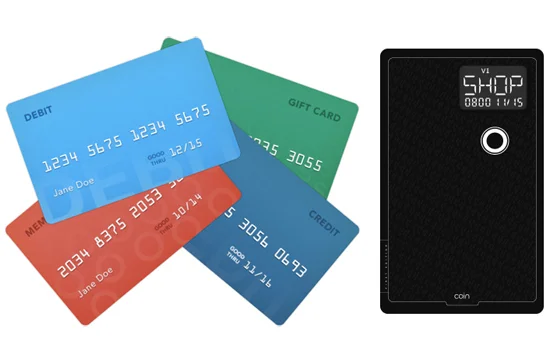
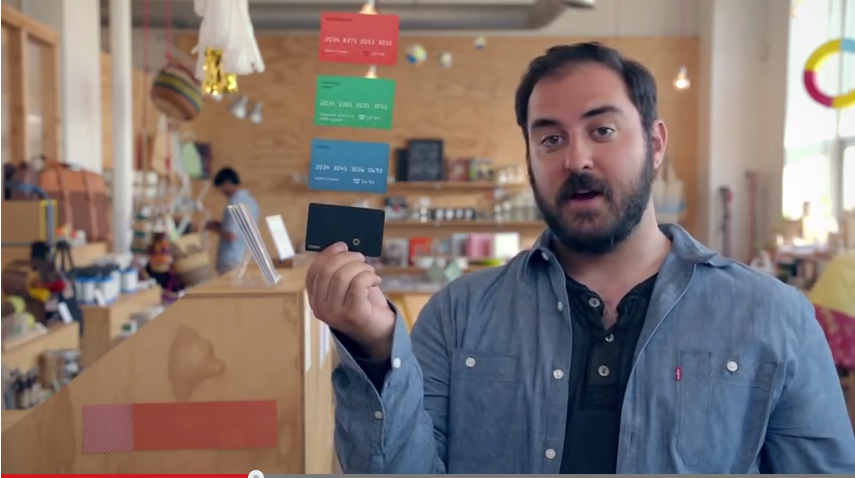
Recently, a small company in San Francisco named Coin released an idea. I only call it an idea because they cannot actually sell their product yet. The suggestion is to have one single credit card to manage all of your credit cards.

I love the concept, but it has some huge hurdles. The company has not yet negotiated a usage agreement with the four major credit card companies — Visa, MasterCard, Amex, Discover — in order to bring this product to market. Plus, your phone also has to be on in order for it to work, so if your battery is dead, you are unable to pay.

Most everyone has more than one credit card, debit card or gift card. So how do we simplify our life yet still make everything secure and easy to use? I have seen different ideas try to tackle managing credit cards, but I don’t think we are asking the right questions. Instead of asking how to manage our credit cards, we should be asking why we are using credit cards at all. Can we imagine a way to pay for something without having to carry a card or cash?

Coin’s idea helps us limp along with cards. But in looking at true innovation disruptions, banks and credit unions have an opportunity to make managing credit an opportunity to deliver a new product. If Coin’s idea becomes a reality, I look forward to using this new product in the future (wisely).

4 Steps to Earning Your Seat At the Big Table

Yes, I said earning your seat. I talk to marketers every day at conferences, workshops, presentations, and on the phone, and they all ask the same questions, “How do I get the respect I deserve?” Or my favorite, “Why can’t I get anyone to listen to me?” Really? My first thought is if you are worrying about your seat, you’re likely not doing your job. And if you’re not doing your job, you’re never going to see that seat.

“The staff doesn’t even respect us,” one will say. While another adds, “Oh yeah, well my Board just thinks I’m sitting in here talking on the phone and designing statement inserts all day.” My question back to you would be – “What are you doing to change any of this?”

I can tell you, from talking to those with whom you would like to be seated, what the perception of many marketers has been for years. Sadly, it’s changing slower than any of us would like to see. Here are my top three observations from “the Big Table”:

  • “They’ve been here for three years and I’m not sure they can even read a Call Report.” (And if you’re asking yourself what that is, you best read on)
  •  “I don’t believe they know anything about ratios, cost of funds or what we need to do to make money.”
  •  “I’ve never seen anything from them, except for tactical ideas on how to carry out a loan campaign, that would tell me there is a strategy that parallels where we want to grow as an organization. There is nothing proactive about our marketing.”

Here are six simple steps that can get you headed down the path and into the room where that Big Table is sitting:

  1. Read a book. That sounds really simple, doesn’t it? Then why aren’t you doing it? Ask yourself, “What should my organization be thinking about to get ahead and differentiate ourselves?” Books like Dan Ariely’s “Predictably Irrational,” or “Delivering Happiness” (about Zappos) by Tony Hsieh. Or, some light reading about a brand experience like “The Trader Joe’s Adventure,” by Len Lewis. No – you don’t see any “How to Run A Successful Marketing Campaign” books here. We’re part of bigger world, people! Get out in it and learn from ideas outside our industry.
  2. Find a mentor. I’ve had a few in my many years in financial marketing. One of them, my boss and friend, Mark Weber. Seek out people you admire and talk to them…and L-I-S-T-E-N to their stories. If it’s your boss – talk to him about your interest in learning how you can impact your organization at a higher level, and that you believe a great way to do that is by sitting at the Big Table to see how they work. It’s your job to seek out a mentor or two or three. They will not come to you – no matter how great you believe your potential is.
  3. Go back to school! Does that sound harsh? You have so many opportunities to advance your life and marketing skills. Do it within the professional organizations that you have right in front of you: CUES, CUNA, NAFCU, BAI, ABA, AMA (gotta love acronyms, right?). My point is, they all have schools, webinars, and opportunities you can leverage to learn from some of the best and brightest minds the financial industry has to offer. Use them for all they’re worth – because they will make you worth much more in so many ways.
  4. Share yourself. How big is your personal and professional network? That’s what all of this is about…going back to school, linking in with people you know and the people they know. And find people outside your circle. If you want to be at the Big Table, expand your network to include those people, and their people, and their people’s people. Share what you are working on, pain points you are dealing with, expectations you have of yourself as you grow. I suspect you’re out at events, active in your community service organizations like Rotary, that you believe in something so passionately that you are part of a non-profit that aligns with your values? That’s your network. Use it!
  5. Focus. If there is one thing we have trouble with ourselves, and many times our organization as well, it’s staying focused. We’re torn in a dozen different directions every day, so how do we keep any focus on ourselves to grow, learn, and earn our seat at that Big Table? I’ve done this for years, and it’s worked pretty well. Try this:
  6. Write it down. Sounds simple enough, doesn’t it? Write down the one thing you are going to do that will get you to read a book, find a mentor, go back to school and share yourself. DO NOT put it in your desk. DO fold it up and put it in your pocket (not your wallet, not in a drawer, not on the fridge or wall. In your pocket). Pull it out every day, read it, and make it happen.

Earning your seat is about being of value and earning trust. It’s an everyday thing you’ll want to build on for the rest of your life.

Strategic brand design: A driver of growth, enhanced culture and unique experiences

One of the keys to unleashing the potential of an organization to step into the next level of market growth is building and clearly articulating a unified brand strategy and brand-driven culture. With it, you can inspire and guide internal teams towards meaningful change and consistent communications that align to build a fresh and well-differentiated brand image. This can create a unique experience in the market, generating meaningful differentiation from competitors.

One of the first challenges facing most financial institutions is identifying whether your current brand program and messaging is helping – or hindering employees from knowing how to behave consistently and help customers bank smarter, simpler and solve problems every day.

Is your mission clear and your values compelling and lived out?

In our work with over 160 credit unions and community banks across North America, we’ve discovered the vast majority of mission statements are vague, filled with hyperbole and have little or nothing to do with delivering extraordinary service experiences. Instead of inspiring great brand experiences, they lead to staff confusion.

In our internal cultural surveys and staff focus groups, we find most organizations’ core values are not remembered — or clear to staff. Few employees have a clear idea how to embody brand actions or deliver experiences that reflect the core values (e.g. how will I see or hear integrity being lived out?). NPS scores and detailed consumer research often reveal a very different picture than what management believes.

But shouldn’t your core values align tightly to your unique brand promise and be passionately demonstrated every day? It might be time to look at updating your values. 

The Power of a Focused and Relevant Brand Experience

When brands are driven by a clear and simple brand promise, aligned tightly to your personality and key messages, employees can see exactly how to embody them and create memorable brand experiences.

Reinforced by coaching and rewarded, they become part of a new brand “tribal language” among the staff. Sharing these unique brand attributes and living out clear values with a common staff language can change your business and brand service experiences forever for the better.

We have developed one of the most unique brand training programs in the industry to move clients beyond basic service quality or sales culture training, to live our consistent brand experiences, using a common set of brand messages that link staff to a unifying brand promise.

“It’s not just the brand’s visual identity that’s most important, but rather the values and overall messages of the brand. Even before Weber Marketing designed our new logo and look and feel, our brand was about the cultural change. A real substantive redirection of an institution takes engaging the staff.”

– Juli Anne Callis, CEO, NIH Federal Credit Union

To a prospect walking in your door for the first time, this level of positive energy and consistent rich brand experience can generate an audible “wow.” Although your visitor can’t exactly define what that “wow” is, seeing and feeling a well-orchestrated brand experience, passionate staff and brand processes that work seamlessly is absolutely refreshing. This is especially true in a commoditized financial services industry not known for passionate branded service like Nordstrom or Apple stores.

Remember your own experience at that gem of a neighborhood hangout, or restaurant that becomes your favorite. Or even the local bartender, waiter or florist whose quirky, fun, knowledgeable and welcoming “vibe” sets an incredible tone. The vibe didn’t just happen one day. It took aligning people to deliver extraordinary experiences. The cultural impact of this kind of “engineered” brand cultural shift – and the customer storytelling, loyalty and referrals that can result – spreads like wildfire.

“The facts are that since the brand transformation and Weber Marketing Group’s involvement, new loan originations have significantly exceeded all prior records. We achieved 32% core deposit growth and new member growth has been steady in our targeted younger segments. This trend is heading in a positive direction.”

– Juli Anne Callis, CEO, NIH Federal Credit Union

Using brand design to simplify experiences

One of Weber Marketing Group’s most powerful tools for shaping and improving consumer perceptions is engineering brand design into traditional and complex operational processes like branch design and website user experiences.

Brand design used strategically helps our clients simplify and engineer transformational changes in consumer perceptions by aligning channels and brand experiences. That includes linking in person experiences (branch layout, digital media, ATM screens), social media (Facebook, Twitter, YouTube), and interactive content (branded videos, website, microsites, intranet). It becomes a seamless and refreshingly bold visual style, with a unique voice, and dynamic personality. Great design style, combined with personal “brand storytelling” of what impacts and relational connections look like, is highly persuasive in shaping new image perceptions.

But brand building can’t stop with external brand look and feel, color and rich messaging alone. Great branding must transform consumer experiences from the inside out. Well-focused cultural staff brand training, driven by a well-defined set of actions, new staff behaviors, extraordinary service standards, embodying core values, and a fresh set of messages (yes, you will need one consistent “elevator pitch” for everyone), can help you align 40, or even 400 employees. Our brand training programs help our clients deliver a consistent, unique and clearly superior branded service experience. It can enhance and drive new levels of net member growth, increased loyalty and higher levels of profitable relationships.

“Organizational realignment around mission and values has consistently been a driving force behind helping our clients achieve breakthrough results in growth, profitability and ROI. Simplicity, consistency and authenticity are key.”

– Mike Watson, Principal, Wazuku Advisory Group

Orchestrate your brand experiences to set yourself apart

Stellar brand experiences like the Four Seasons deliver like a great symphony of musicians aligned behind a melodic musical score. No detail is missed to ensure total satisfaction of guests to win their enduring advocacy, storytelling and referrals. It occurs behind the scenes, proactively and ongoing to ensure a personalized, unique and powerful focus of each clients needs and wants.

Trying to stand out in delivering a suite of largely commoditized financial services is tough and technology is not making it necessarily easier. You can take a few lessons from outside the banking industry about brand experience building to drive differentiation and positive sustained growth.


Are you getting “brand update” notifications?

Slowness. Freezing. Inefficiency. Not connecting. All are symptoms of a computer operating system or program when it is in need of an update.

Most often the update notification appears but you have no idea what it means or what to do about it until you have your IT department look at it. And sadly, a great deal of people ignore the update notice until some situation becomes complex enough to warrant immediate and sometimes lengthy attention.

Maintaining your organization’s brand sometimes follows the same path. There are signals that indicate something is amiss or not synced up correctly. These signals can be subtle and easy to miss. Or, just like the update notification, they can be ignored. But that never turns out well – for your computer or your brand.

Not too many people would trade their computer in on another one simply because the update notification was appearing.  An update by a qualified IT professional should enable your computer to return to its previous efficient and smooth running condition. Your brand can be handled the same way by having it reviewed and tweaked by a qualified brand technician.

Brand technicians will tell you that sometimes when financial services providers ask for help to develop a new brand for them, quite often it isn’t necessary. Some of these organizations have good solid brands with interesting heritage and strong brand equity, but they have simply lost their way. Their lack of focus, consistency and continuity with their brand communications results in a loss of power. Just like the out-of-date computer.

Most often, the brand simply loses the ability to express its differentiation.  Not having a clear, concise and easy-to-understand brand position results in being lost in the sea of sameness from all the other competitors operating in the same space. The building blocks of differentiation are there, they’ve just been forgotten, ignored or are miss-firing. The brand needs an update.

A brand update or refresh puts your brand back in the high efficiency mode.  It examines your marketing communications and the experience that you are currently delivering to determine if your brand is standing apart from the crowd. Is your brand promise clear? Messages consistent? Personality evident? Tonality correct? Imagery and verbiage appropriate? Can every one of your associates express how your organization is different in a few short concise words?

Anyone of these components (and others) that fail can throw your brand out of sync. Any one of them can cause your update notification to appear. The question is, do you click on it? Or, do you ignore it?

Don’t put it off any longer. Have your brand inspected by a qualified brand technician to implement an update.

What can Little House on the Prairie teach you about growing your membership?

I’m currently reading the Little House on the Prairie series with my six year old.  For those not familiar, this is the story of a little girl and her pioneer family, set in the late 1800s.  My daughter is captivated, curled up beside me on the bed each night, begging for just one more chapter.

What’s fascinating to me is what she’s absorbing from the story and how it’s changing her behavior.  A few weeks ago, I was fighting a losing battle each morning trying to get her to put her long hair up for school.  She refused to listen to reason, and I was beyond exasperated about having to wash the gum, glue, and who knows what out of her hair on a daily basis.

Now, she’s wearing braids to school (the book tucked under her arm) and replying “Yes Ma” every time I ask her to do something.  I know that part won’t last, but the idea that she might be emulating Laura and Mary’s manners fills me with hope.  Is it possible that one story could alter her belief system in a way that has a positive, long-term affect on her behavior?  The thought makes me want to move out onto the prairie, build a log cabin with my bare hands, and watch her make do with a corn husk doll.  (Almost.)  But perhaps there is a less dramatic lesson here.

This is about storytelling. The terrific lessons the Little House series has to offer my six year old are getting through because she can relate, both to the author and the way the ideas are being shared.  I’m not nagging her to put her hair up, because she sees the value for herself.  The practicality is being demonstrated, not dictated. Laura Ingalls Wilder isn’t telling her to do it—she’s showing her why it matters.

You know I’m not really talking about my daughter anymore, right?  Storytelling is an important tool in your brand building program, a strategy that goes beyond maintaining a consistent voice and tone.  It’s an authentic and engaging way to share your core beliefs with your target audience and help them understand your mission, not just your current product.  It’s a tactic that requires finding the right context, demonstrating common ground, and providing a reason to believe.

Tell your target who you are instead of trying to get them to do something, and you might just alter their beliefs about you.  You might influence their behavior. And you might pick up a new, more loyal customer.