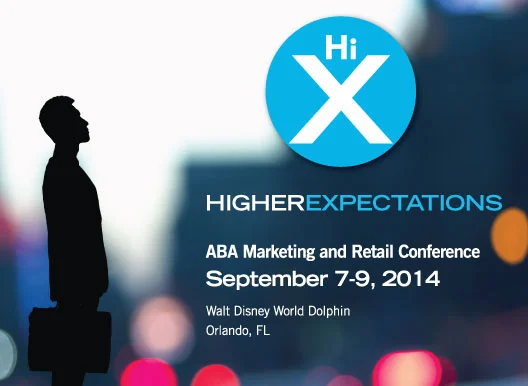
The ABA Marketing & Retail Conference is on September 7th in Orlando.
And Weber Marketing’s Randy Schultz is speaking.
This year’s ABA Marketing & Retail Conference will have more scope and broader content than ever before, with a unique opportunity for marketers and retail bankers to join forces and deliver on higher demands from customers and management.
Topics covered include: Strategic Agility; Sales and Customer Service; Multi-Channel Communications; Digital; Brand Management;. Mobile Banking; Big Data; and much more.
Randy Schultz will share his knowledge and expertise on how to steer your organization’s culture to new levels of delivering the brand at his session on Monday, September 8th at 11:00 AM.
Randy Schultz, VP Marketing Weber Marketing Group
“Turning Staff Into Brand Champions”
You constantly search for ways to measure your organization’s brand equity with customers and prospects, but what about staff?
How loyal is your staff?
Do they really even know what your brand is?
Are they empowered to “live out the brand”?
If you told them to “live your brand”, could they? Would they?
Employees don’t want to feel like the only thing you value is your bottom line and reaching your goals. If your employees are not living the brand internally and out in the community, your story is not being shared effectively.
Neil Goldman, Senior Partner Goldman Consulting & Strategy
Join Randy Schultz and Neil Goldman as they explore how rethinking, aligning and measuring the customer experience offers a proven path to retention, sustainable growth and advocacy.
You’ll leave this workshop with tools to:
Help you manage the success of your brand experience culture
Map your organization’s own customer experience profile
Define and align your organization’s customer experience – branch, human and digital touch-points
Make your customer experience culture stick
This is NOT a presentation. It’s an interactive workshop with case study examples you will bring to the table from your organization. You’ll hear best practice stories from other attendees and learn how your organization can strengthen it’s culture and influence internal functions to get a competitive advantage.
Last August I went to see the Seattle Sounders play the Portland Timbers. It’s one of the biggest rivalry matches in Major League Soccer and it sold out Century Link Field—that’s 67,000+ seats.
67,000+ Americans paid to watch a soccer game. That’s a BIG DEAL.
Over the last year 21 U.S. TV networks (including ESPN, Fox, NBC and Univision) aired close to 4,000 soccer telecasts. That’s almost 1,500 more than in 2010, the year of the last World Cup.
With MLS rapidly expanding from 19 to potentially 24 teams by 2017, it’s safe to say that soccer and soccer fandom are growing in America. And they’re growing fast. So what does that mean for advertisers and their brands?
Thanks to Disney and Univision, all 64 World Cup Matches were broadcast live from Brazil. And with major sponsors (Kia, Hyundai, Adidas, Coca-Cola, VISA), every halftime was chock-full of big game quality spots. But with two continuous 45-minute halves in soccer, advertisers must use a different approach to get noticed. As a result, every element of the game has become branded, even theball.
From the press box to the sideline, every inch was covered with brand placement. Not to mention in-game ads. As consumers, all we needed to do was look at our screen.
In American professional sports—like football, basketball and baseball—we don’t see ads during game play. The only time brands appear is during timeouts or crowd-shots as the camera pans wide, but when the ball is in play, the cameras, and our eyes, focus on the players.
It’s different with soccer. As the ball moves up and down the field it rolls by ads for cell phones and beer. When a goalie takes a drop kick we see every banner and every leaderboard in the nosebleeds. And with such noticeable placement, advertisers get an opportunity to forge more meaningful connections with fans.
Any important game is an emotional rollercoaster. And with every gasp and every cheer, sponsors are right there—even if it’s just something to look at when you can’t stand to watch the action. When you can get in front of your audience as they’re experiencing intense highs and lows, it’s a great opportunity to build brand awareness.
Even after the final whistle, there are still great opportunities for brands to take advantage of like Nike did in this post-cup spot.
And based on the record-breaking success of the 2014 World Cup, it’s looking like advertisers will have many more chances in the near future.
What if you could hire someone to exponentially improve your social media program’s organic reach, increase the number of cost-efficient, highly credible word-of-mouth referrals you receive, generate thought-provoking, branded content for your website and social media platforms, and deepen and enrich your relationships with your members? You’d do it, right?
Guess what? You already have. And they’re sitting right next to you.
As your biggest advocates, your employees and co-workers offer a tremendous amount of talent and influence. And they are equipped to wield it, with access to our big, social, connected world via smartphones, tablets, and the very computer you purchased to enable them to do their jobs. But are you leveraging this valuable resource?
A lot of credit unions aren’t. And frankly, this is high on the list of missed opportunities. It does no one any good in this day and age to pretend your team isn’t on Facebook, Twitter, LinkedIn, etc. all day long on their mobile devices. In fact, it may actually be hurting you to be ignoring and/or inhibiting this behavior. Here’s why:
1. Your social media program needs love.
The reality is that having fans doesn’t mean people are visiting your social media pages. Take Facebook, for example. To drive visitors to your Timeline, you need your posts to appear in the News Feed, right? Well, given constantly evolving algorithms, you can no longer assume that your content is getting served up. (Facebook’s average organic reach is already as low as 6%.) To get eyeballs on your stories, you need likes, shares, and comments; i.e. engagement. Who better to help build this momentum than the people sitting right next to you?
2. Your social media/marketing/jack-of-all-trades manager needs support.
If 10% of a person in your marketing department is responsible for generating and monitoring 100% of your social media content, how successful can your program really be? The fact is that social media should have a full seat at the marketing table—and a good, cushy seat at that. It’s direct, it’s measurable, and it’s reaching a growing audience of 25–55 year olds, the same people who represent the loan, credit, investment, and insurance growth your organization likely needs. But it requires significant attention.
3. Your employees are surprisingly talented.
Who knew Bob in Compliance was a collector of credit union memorabilia? Or that Jane in HR secretly aspires to write the next great American novel? Did you know that Becky in the Mortgage department is taking night classes in photography? My point is this: there are people in your organization who would jump at the chance to share their talents and contribute to the success of the brand. Why not harness that energy by assigning these talented folks to stories, articles, and images that showcase your culture, brand personality, and thought leadership? Think of your social media manager, not as your beat reporter, but as your editor-in-chief fielding a variety of perspectives.
The impact of empowering your employees to contribute to your brand story is potentially huge. Not only do they represent new, cost efficient avenues for content generation but engaging them may create a more passionate, honest, and motivated culture. Let them know that you value their opinions, respect their networks, and trust their ability to be productive when they are online.
If you want to talk more about this, my colleague, Charlotte Boutz, and I would love to hear your thoughts. Comment here, and we’ll be sure to respond.
Imagine discovering an Islamic militant group ravaging Iraq and Syria shared your brand name (ouch!). What would you do? Abandon your name? Or hold onto the equity you’ve built and risk negative brand associations by keeping your newly controversial name?
These are the questions Isis, a mobile wallet company, faced when ISIS (Islamic State of Iraq and Syria) started hitting headlines for links to sectarian violence against government forces and civilians.
Isis launched their brand four years ago. “We wanted a name that brought to life our company and our values. Above all, we wanted a brand that captured the simplicity of our mobile wallet experience. We chose Isis,” said CEO Michael Abbott in a statement released on the company’s website.
“However coincidental, we have no interest in sharing a name with a group whose name has become synonymous with violence, and our hearts go out to those who are suffering. As a company, we have made the decision to rebrand,” said Abbott.
While their reasons likely differ, Credit Union and Bank executive teams are gathered in boardrooms right now, wrestling with the decision to change their name. They are discussing whether a new name will better position them for long-term sustainable growth. They’re asking important questions: How will my members react to a new name? Will customers assume we are merging and leave? How is our current name helping or limiting growth today? What is the ROI if we do change?
These are valid and challenging discussions to take on. It’s both strategic—and for many—an emotional decision to change a name. Even Abbot stated under his company’s extreme set of circumstances that, “Changing a brand is never easy, but we know this is the right decision—for our company, our partners and our customers.”
Isis made a strategic decision to choose a new name in order to protect the core of the brand—their reputation, image, perceptions and future growth potential. The easy decision would have been do nothing, see what happens, and hope the impact won’t be that severe. Instead, they made a courageous decision to change. Part of sustaining a great brand is remaining responsive to the cultural landscape. Sometimes, change is good.
Nimble, an Australian company offering quick loans, produced a brilliant advertising campaign that uses odd humor in a way that effectively tells the story of what they do. The campaign won a silver at the Cannes this year.
Back in the dot-com era, many commercials used the same brand of odd humor; however, it was not always successful because, ultimately, it was telling a joke for the sake of telling a joke, not telling a joke for the sake of storytelling.
Using odd humor in commercials can be powerful, but only if it is done with purpose and flawless execution. When odd humor is done right, even pregnant dudes can sell loans.
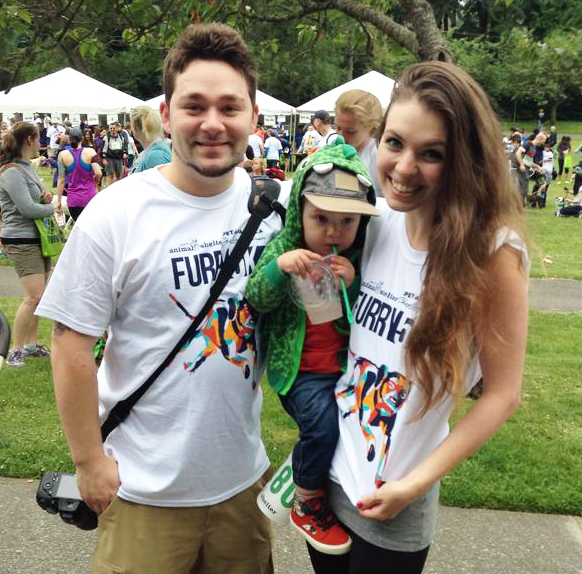
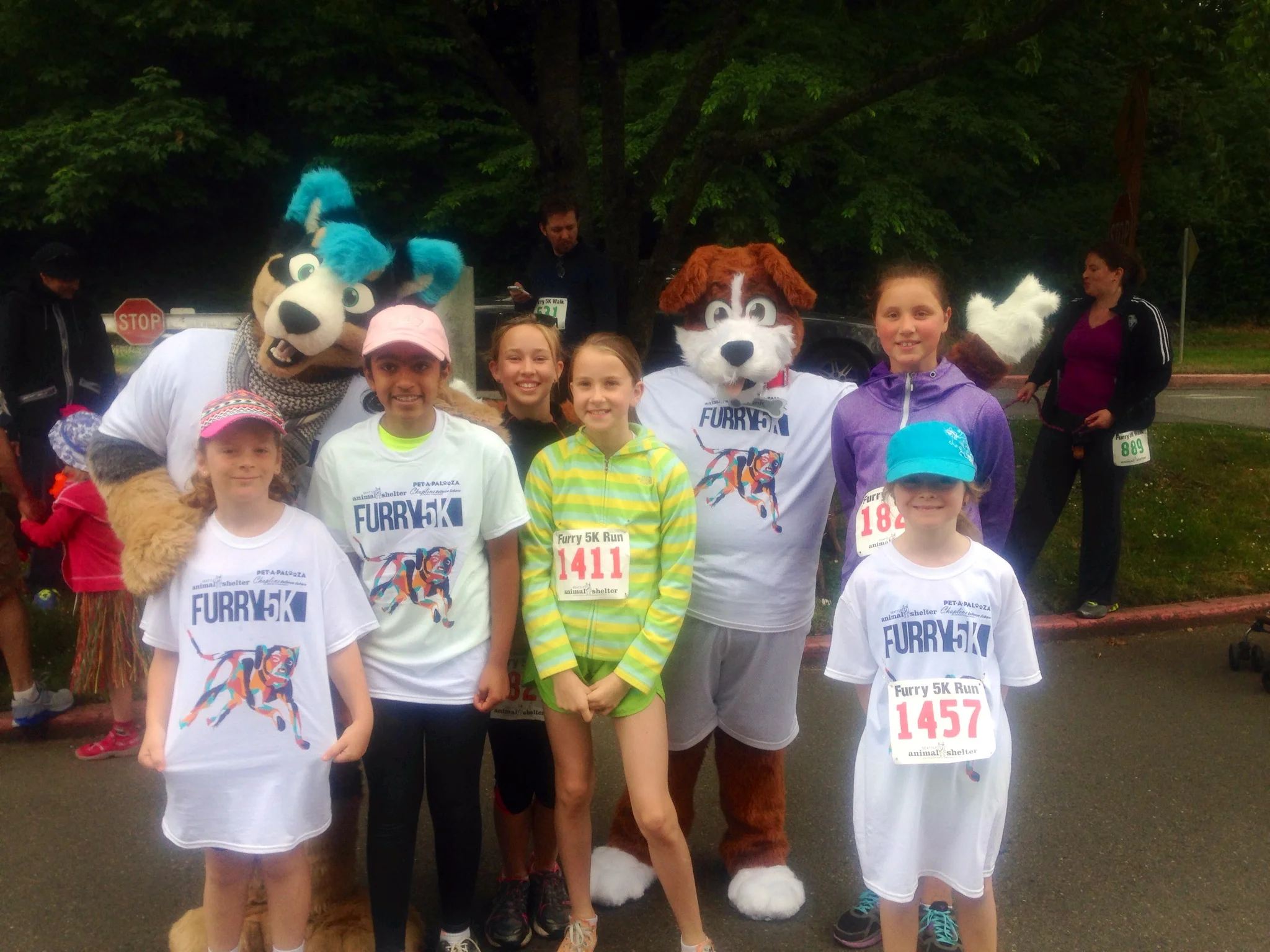
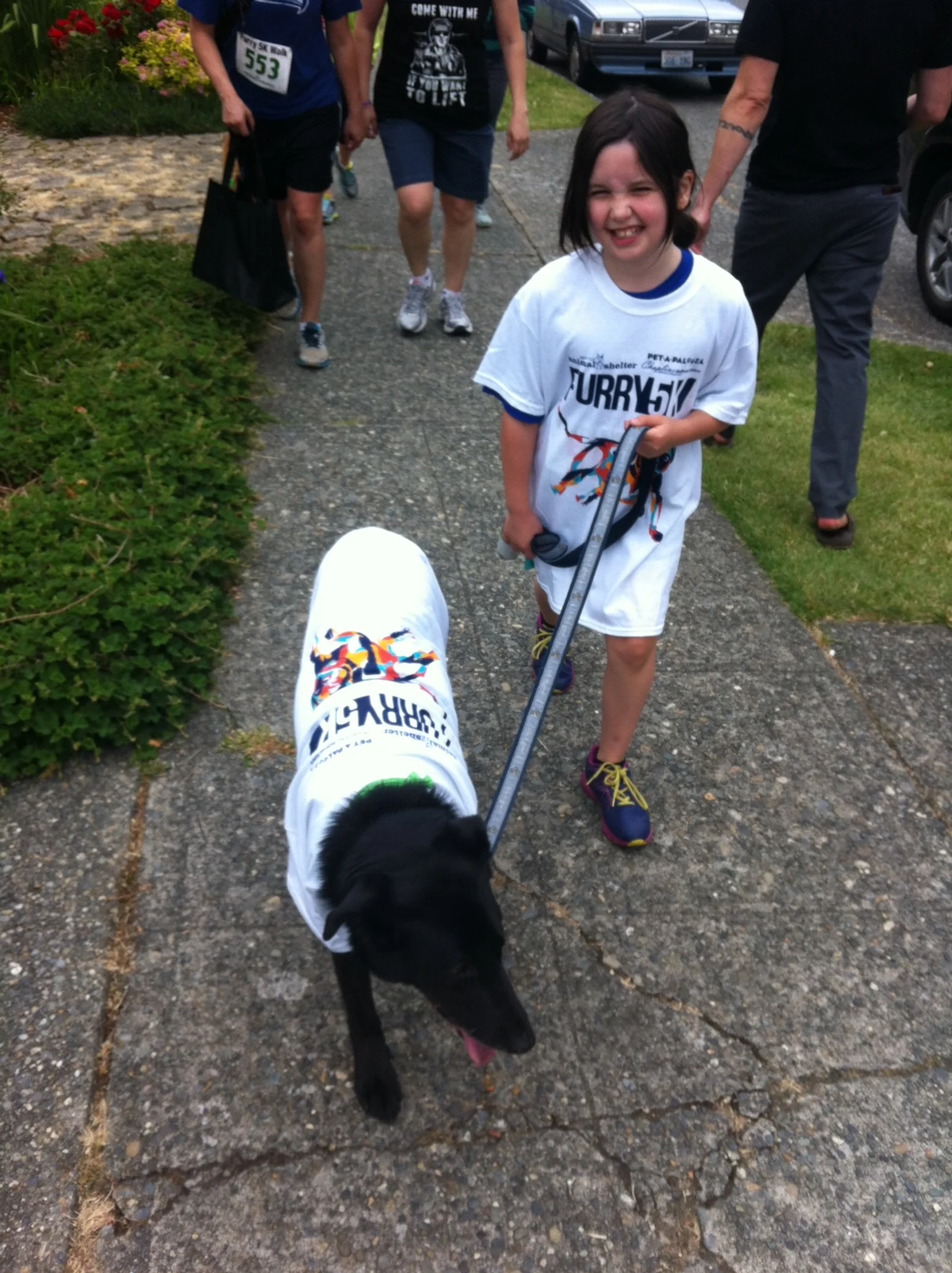
The Seattle Animal Shelter presented its 15th annual Furry 5K at Seward Park on Sunday, June 8th, and members of the Weber team showed their support.
The Furry 5K is the Seattle Animal Shelter’s largest fundraising event. This year, the event raised a total of $98,000 for the Help the Animals Fund (HTAF), which pays for veterinary care of sick and injured animals at the shelter.
Ruth Kapcia, a Senior Account Manager at Weber Marketing Group, is a long-time volunteer for the Seattle Animal Shelter and a past Race Director for the Furry 5K.
Justen Weber, one of our art directors, donated his time and talent to design the look and feel for this year’s event.
“I wanted to capture the positive spirit and movement that this event stands for,” said Justen. “Our model rescued-dog, Cheney, was the perfect symbol of this. Done with an expressive pallet-knife technique in a vibrant color pallet – this design demonstrates the raw energy and joy of the Furry 5K.”
Karen McGaughey’s daughters Caroline and Gracie attended the event with their Girl Scout troop.
Samantha, Ben Stangland’s daughter, also completed the 5K with her neighbor’s dog Tula.
Friday, July 11, 10:30 am – 11:30 am: Managing for Social Media Success
Risk management is critical. But it’s only part of the story. Kristiana will share practical guidance on how to lead your organization toward a multi-disciplinary social media program that manages risk while capturing the true opportunity of deepening relationships with your members and attracting new ones. Topics will include key stakeholder engagement, governance, brand translation, efficiency, and (most important of all) driving a social media friendly culture.
Saturday, July 12, 9:05 am – 10:05 am: Facebook 2.0
Facebook is a great tool for promoting events, announcing service changes and interruptions, and sharing your culture—your community involvement, your team successes, and your proactive efforts to address challenges and opportunities. But as the medium evolves, new strategies are necessary to keep your pages, posts, and campaigns fresh and engaging. Learn more about what’s changing and what you can do to help your brand build connection, loyalty, recommendations and sharing.
Don’t miss this exciting opportunity to join Kristiana and other top social media experts for informative sessions and discussions on today’s important issues surrounding social media.
Effective strategic marketing communicates your credit union’s value, sets your brand apart, improves the member experience, and drives bottom line growth and profitability. It’s time to dial it up.
Join the Credit Union Executives Society (CUES) in Seattle on July 14th for the School of Strategic Marketing, led by Mark Weber, CEO of Weber Marketing Group. This high level two-year program is designed for senior leaders and credit union marketing executives who want to learn the keys to strategy-focused marketing, culture, channel design and branding. Space is absolutely limited and last year’s class filled quickly.
Accomplished US and Canadian thought-leaders and experts will guide attendees in discussions, application and case studies on:
Building and implementing a marketing strategy that drives results and increases ROI.
Evolving the role of the marketing team and your senior leadership to impact your organization and culture.
Leveraging marketing’s growing role in channel strategies: online, mobile, branch, effective SEO, and social media engagement.
Applying effective market research to segment, assess brand distinction, and drive mission-critical strategies.
Bringing vision to life through branding and cultural transformation.
Learning how Nintendo of America and Starbucks build cultural engagement and organizational development.
Moving your brand to a market-leading position.
Get an unprecedented opportunity for backstage tours at some of the world’s leading brands – The Gates Foundation (first year class) and Nordstrom (second year class).
Don’t miss this exciting and educational executive marketing certification opportunity. Click here to register or contact CUES at 800-252-2664.
Premier US and Canadian Speakers:
Tim Russell, Manager, Learning and Development, Nintendo of America
Mark Weber, CEO Weber Marketing Group
Kelly Schrader, Senior VP/Chief Operations & Risk Officer, OnPoint Community Credit Union
Mike Watson, Principal, Wazuku Advisory Group
Josh Streufert, Creative Director, Weber Marketing Group
Dr. Neil Goldman, CEO/Senior Partner, Goldman Consulting & Strategy
Kristiana Lockman, Senior Account Manager, Weber Marketing Group
Mike Bartoo, Regional Manager, Marquis Software
John Mathes, Director of Brand Strategy, Weber Marketing Group
Having true power branches can align your culture, reflect your unique brand, and position you for higher performance and growth.
The new wave of mobile, social and online banking is reshaping how consumers bank.
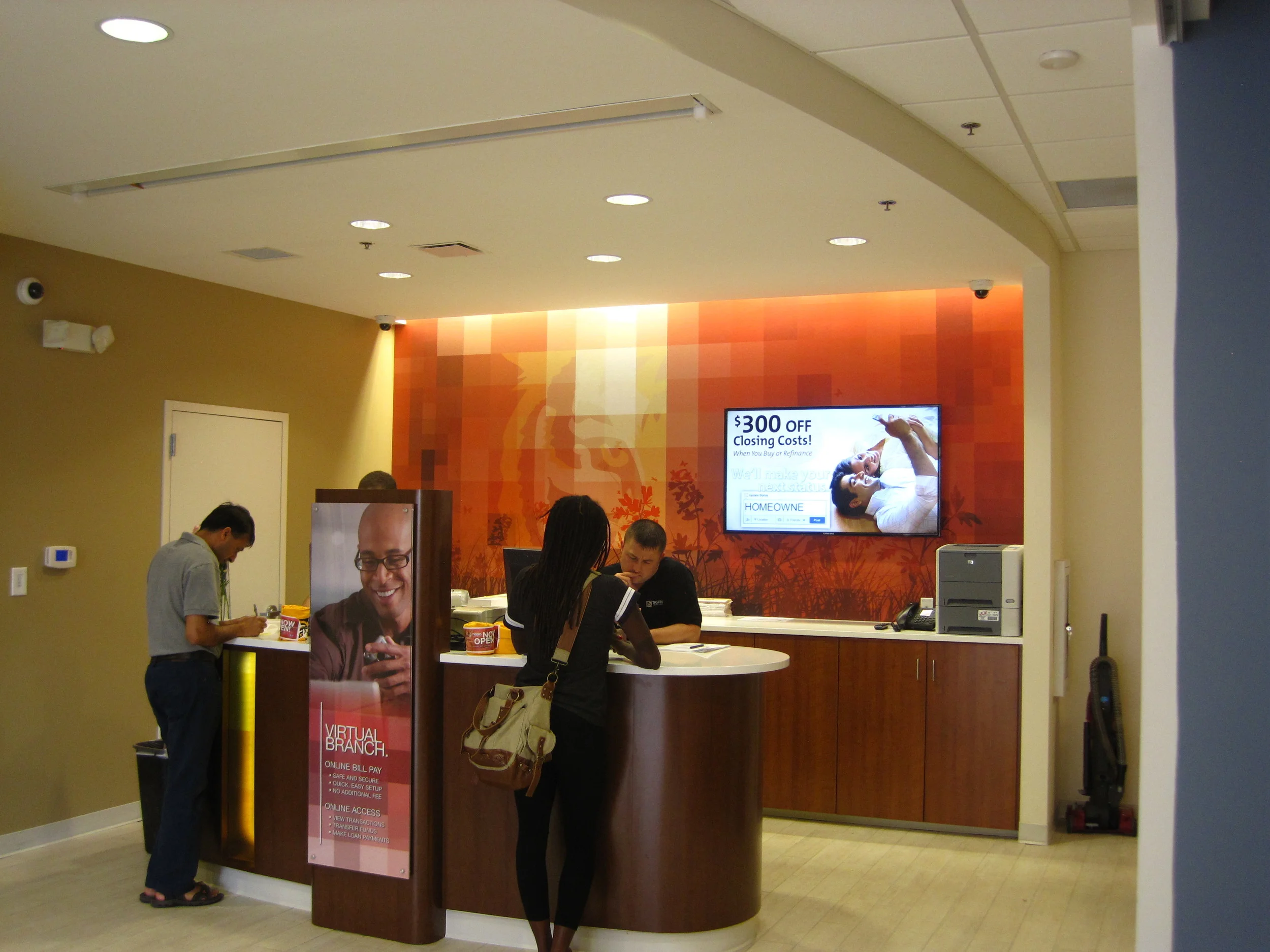
Their preferences and patterns are shifting forever. Financial institutions are scrambling to define how their traditional teller-focused transactional model will shift – or fade away. But what can you do to set your brand apart from competitors in meaningful and relevant ways to evolve technology and connect with consumers and business audiences?
“What can you do now to set your brand apart from competitors in meaningful and relevant ways to connect with consumers and business audiences?”
The future of branch evolution is filled with major questions that require strategic and innovative answers: Do we still need branches; if so, what kind? How big will they be? How much technology is enough; too much; what’s working well? Who will use branches and for what purpose? What will successful performance and metrics look like in an increasingly digital world? How will staff, cultures and delivery systems need to adapt?
Here are five answers that address the re-invention of banking. They’re culled from fresh and innovative new branch prototypes we have designed. They include organizational and operational insights from those tackling this major model shift to ensure their success.
1. Embrace Smart Digital Technology
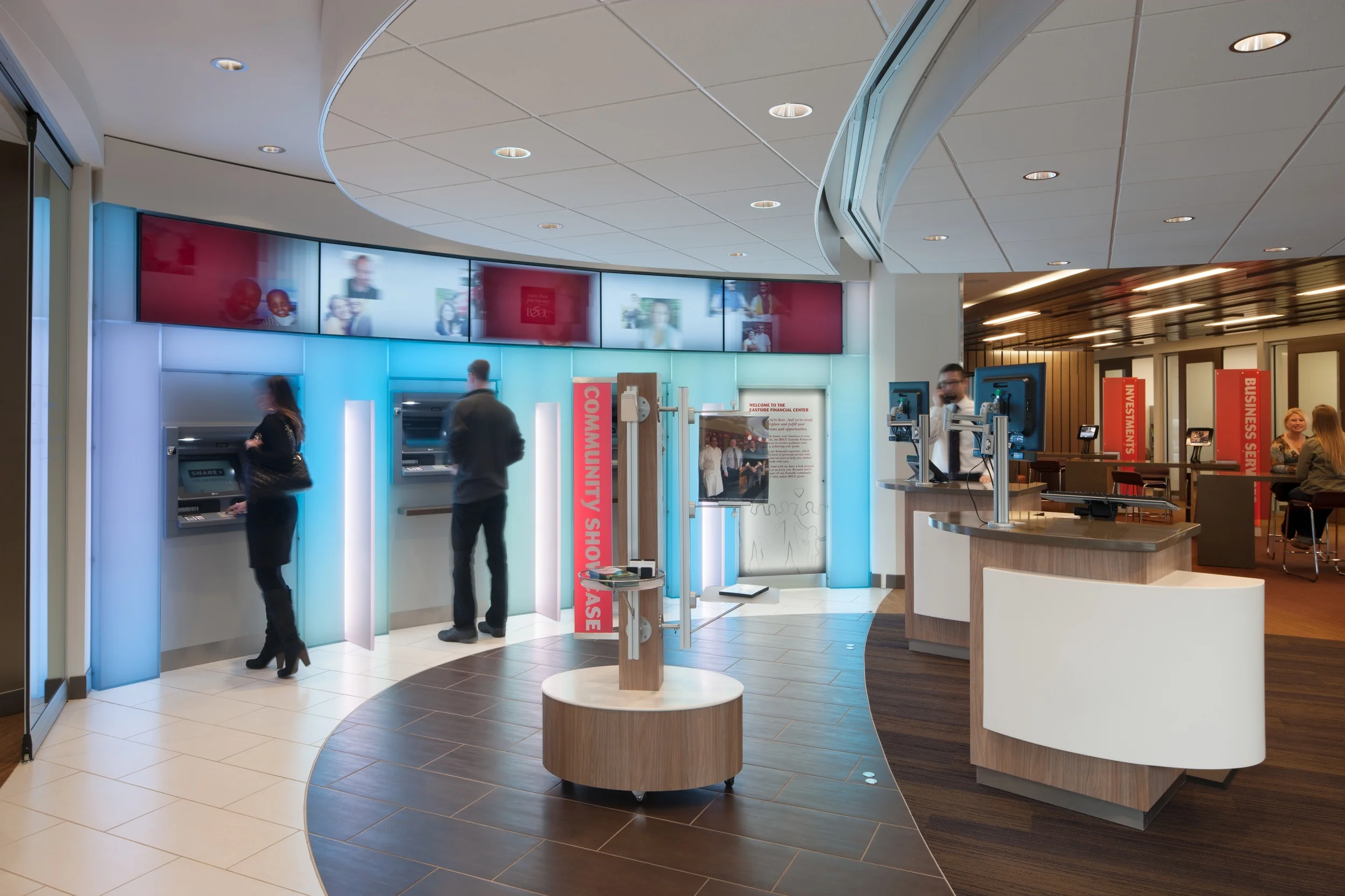
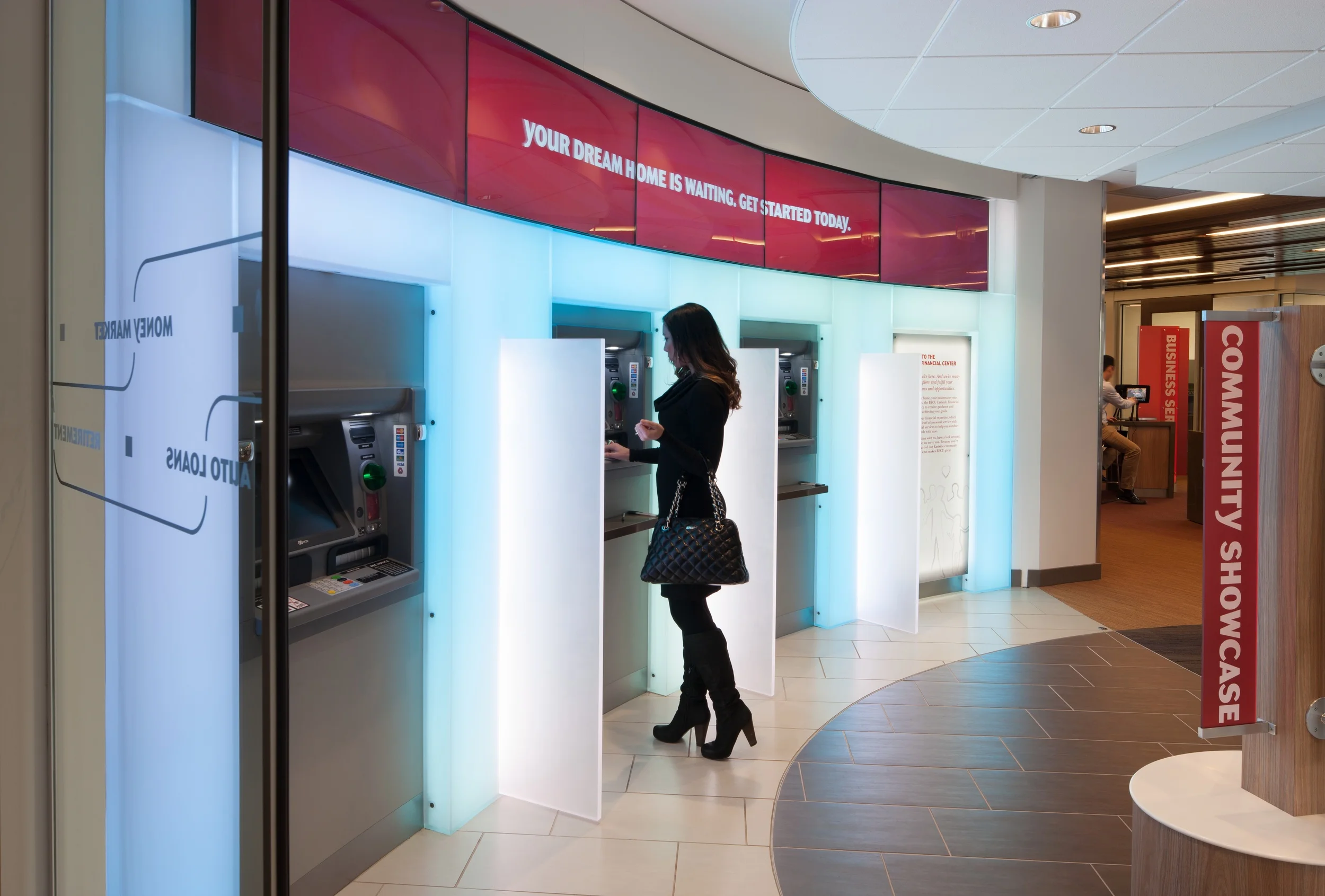
A smart 24/7 foyer with rolling walls surrounds at ATM digital light wall and expert Mobile Concierges at the new BECU Regional Financial Center, Bellevue, WA.
For time-starved consumers, coming to a branch to wait in a teller line is as painful as grocery lines with too few clerks and wasted time. Shifting from expensive teller transactions to automated cash delivery and new technologies takes more than just sticking new machines in the wall.
At the new BECU Advisory Financial Center, every detail of the brand experience has been engineered to ensure a powerful human touch is blended tightly with savvy high tech. Split into three distinct areas, the branch allows varying hours for high advisory guided interactions from mortgage lending, small business banking and investing to showcase how BECU can guide people to actively engage financial health.
Designed for flexibility and adaptation to new technologies as they evolve, the branch is a virtual testing lab and guided trial of iPads, mobile banking, digital messaging and electronic lobby queuing to evolve future delivery. The key isn’t the technology alone though, it’s the engineered brand experience and the maximization of every square foot with intentionality.
2. Engineer for Advisory Experiences
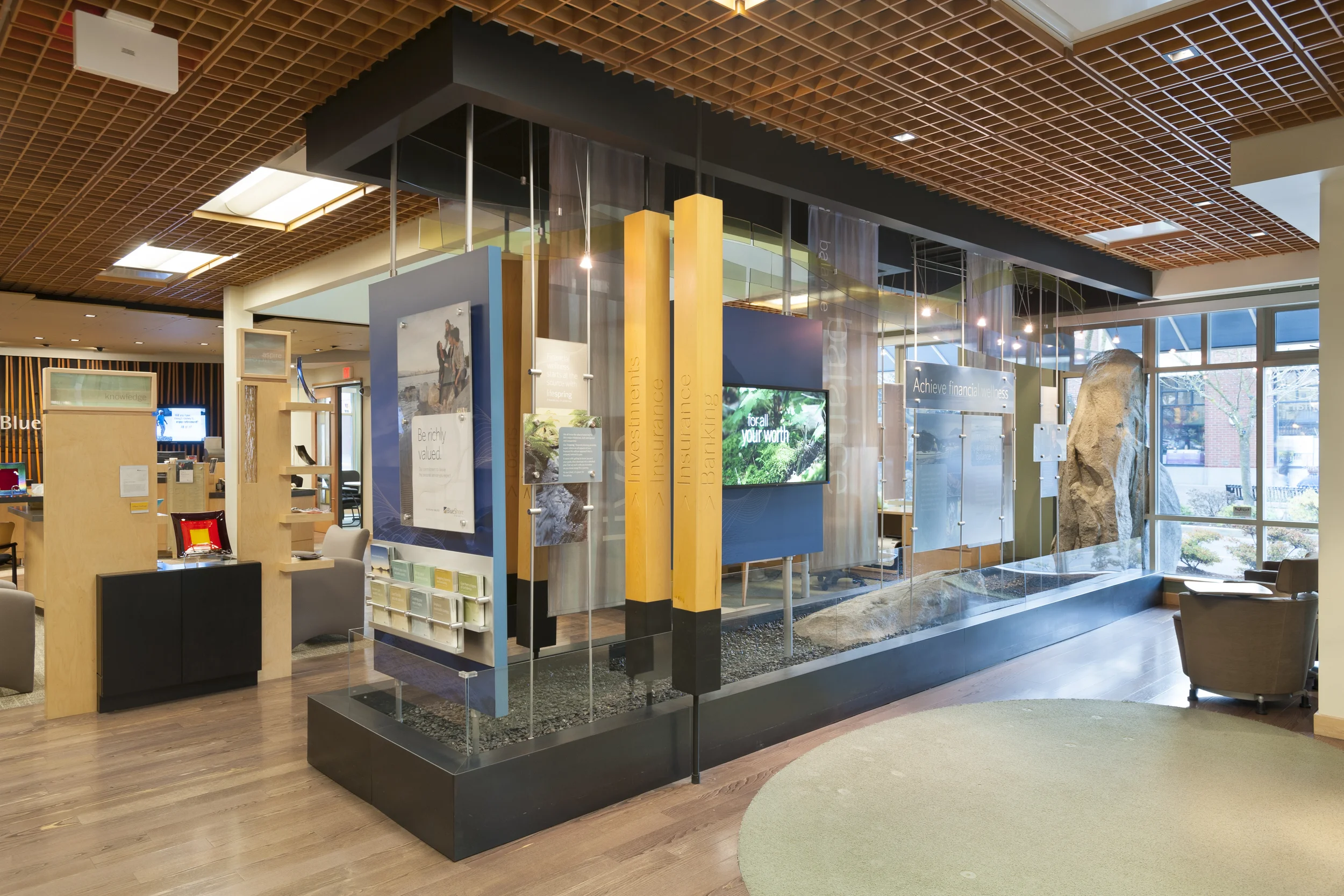
BlueShore Financial’s trademarked Financial Spa branches key on highly managed advisory services for the affluent.
The demand for new interest income sources is rising fast and branches are not designed for that shift to advice. While many desire to become their clients “Trusted Advisor,” achieving this mantra requires a holistic new business model and enterprise-wide branding. Every detail of the engagement must be orchestrated from the entry to the final thank you, because it’s no longer about transactions, but staging effective interactions.
“It’s no longer about transactions, but staging effective interactions.”
The Financial Spa was designed for Vancouver, BC-based BlueShore Financial to shift banking from a commoditized mass market model, to a premium boutique brand experience. Inspired from an intimate spa model, every detail of the space, native materials, flow, colors, style, merchandising and messaging is engineered to express financial wellness.
Concierge training was built working with the premier hospitality of the Four Seasons resort team. Staff engagement in assigning clients, developing financial plans and managing wealth is an embedded part of the culture.
The results are jaw-dropping: 450% assets under administration growth over 10 years, a ranking among the provinces top financial advisors and selection as one of Canada’s Top 10 Employers.
Staging engagement and interactions begins at the Discovery Wall which links wifi access, digital messaging and informational exploration of financial wellness.Far from a receptionist, the Greeter is one of the best trained and most important position in managing the spa experience and first impressions.
3. Dynamically Communicate your Distinct Value Proposition
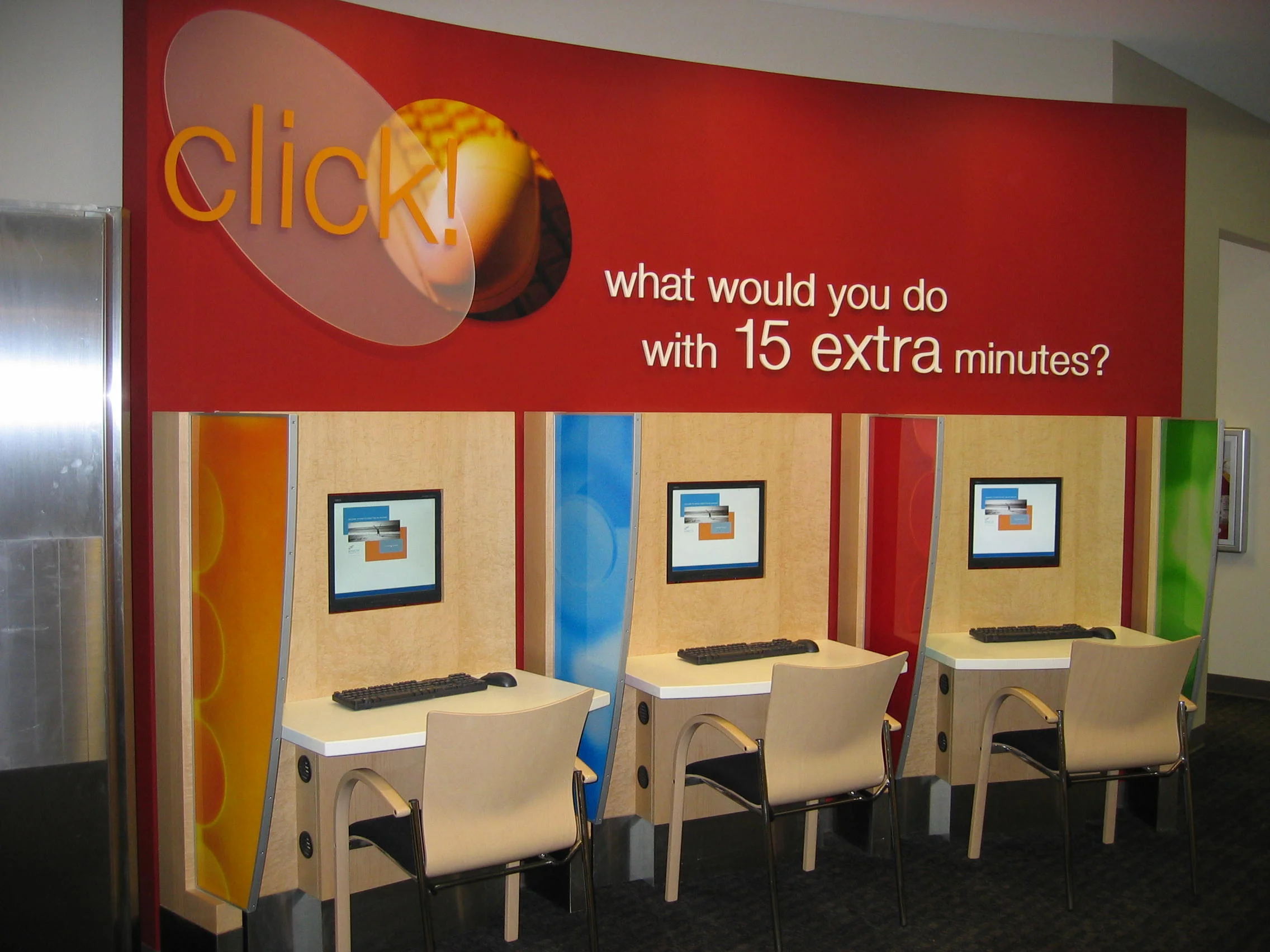
The era of retail product posters, brochures and quarterly campaigns are coming to a rapid end. In a YouTube 30-second video-saturated world, you need to entertain and instantly communicate your solutions, value and ways to enhance peoples lives.
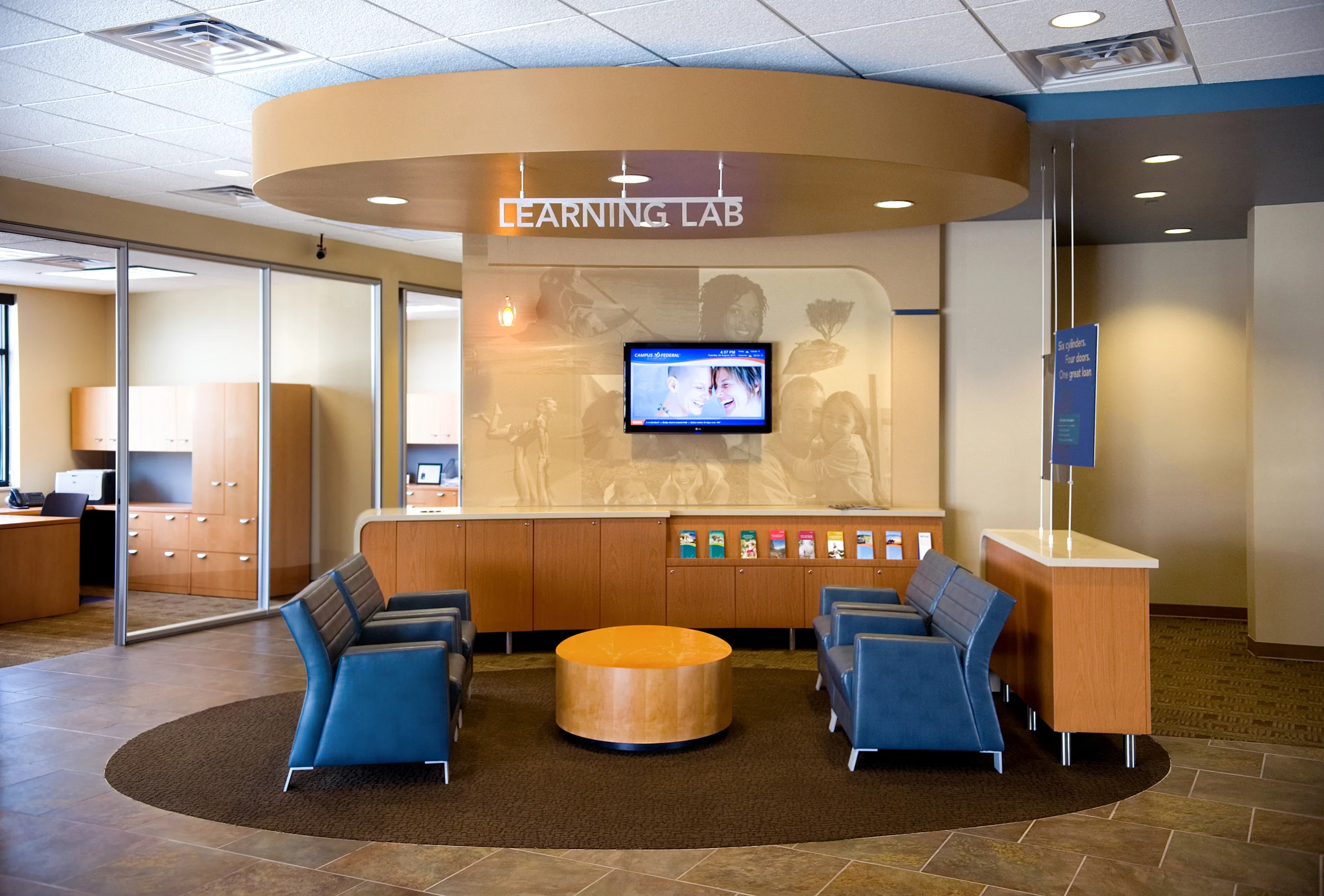
Branch design should embrace this search for information, insights and advice with savvy digital messaging, online content, wayfinding signage to make is easy to navigate, and tools that make it simpler to learn and bank: from iPads to touch screen video. Helping children navigate financial literacy with savvy technology is a bonus payoff for parents short on expertise and hungry for guidance.
4. Become a Catalyst for Community Growth
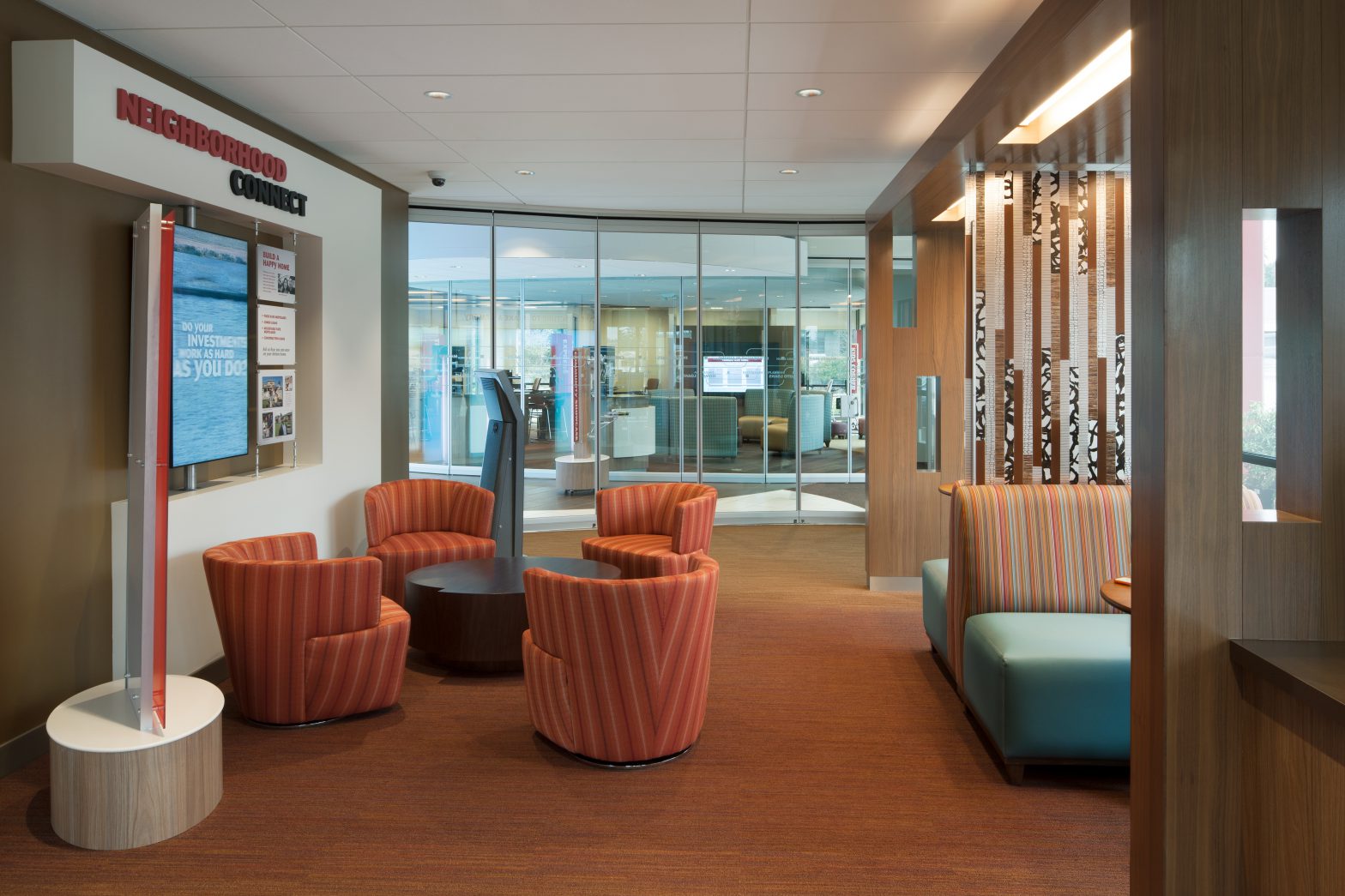
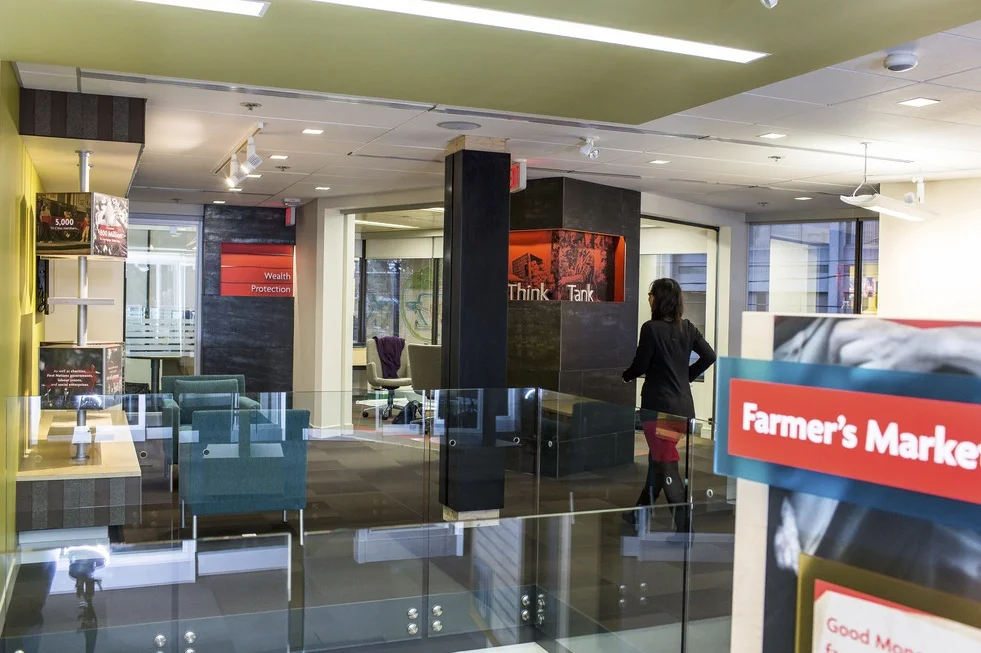
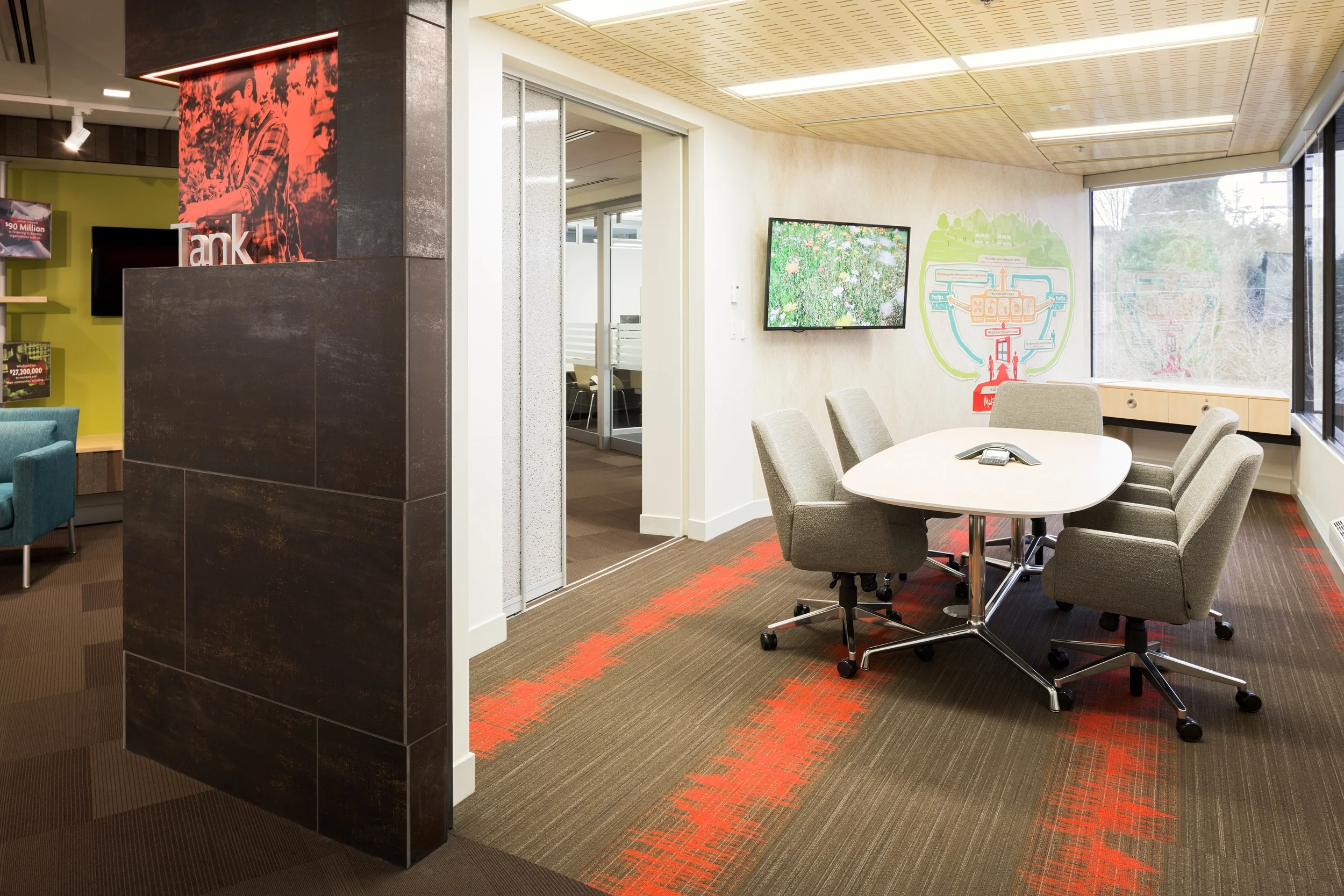
Vancity’s new Think Tank serves as an incubation hub for local businesses and non-profits.
Finding new ways to become more relevant that spark conversations and help businesses and local communities thrive can be transformational — if you’re willing to go all in and not just pay lip service.
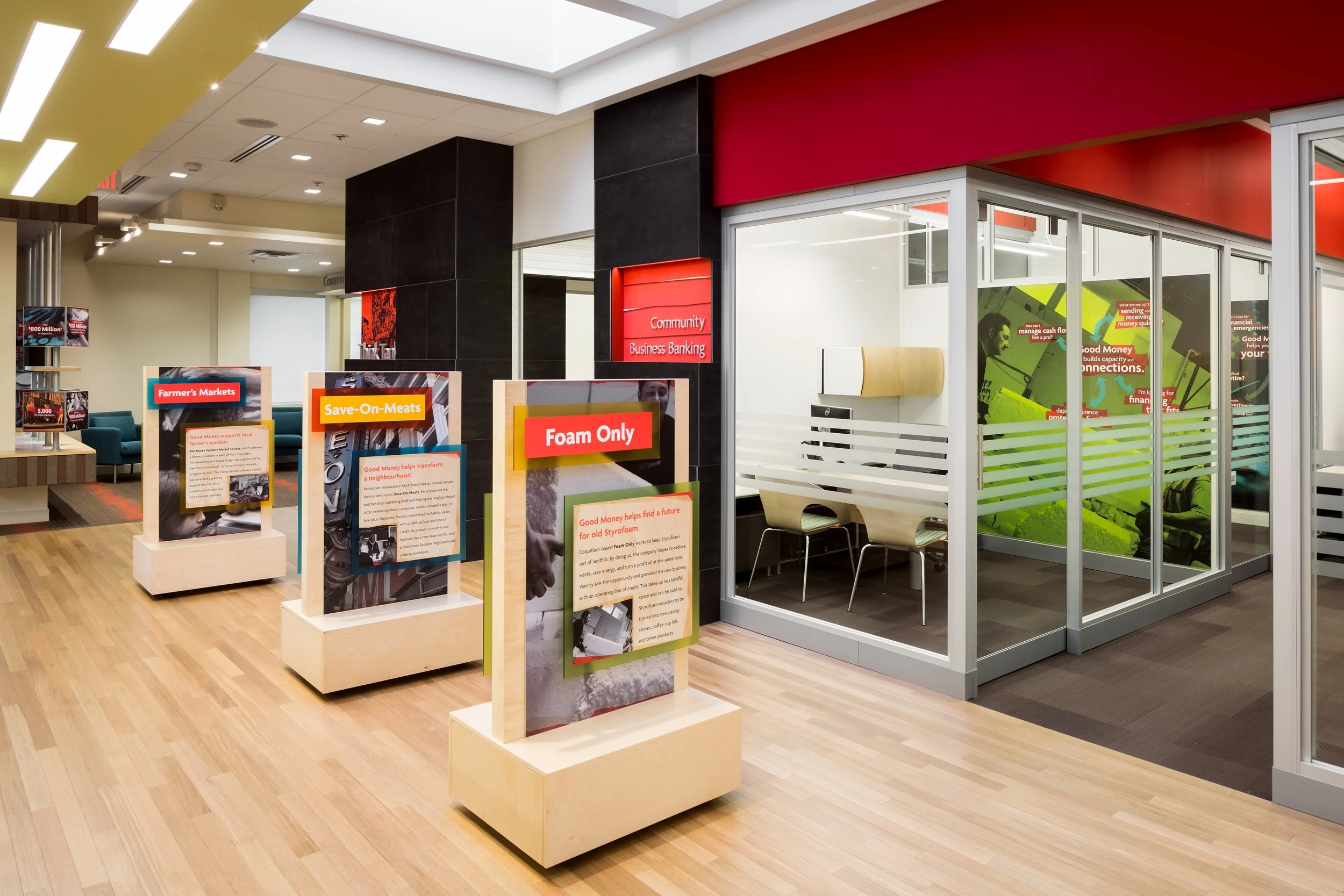
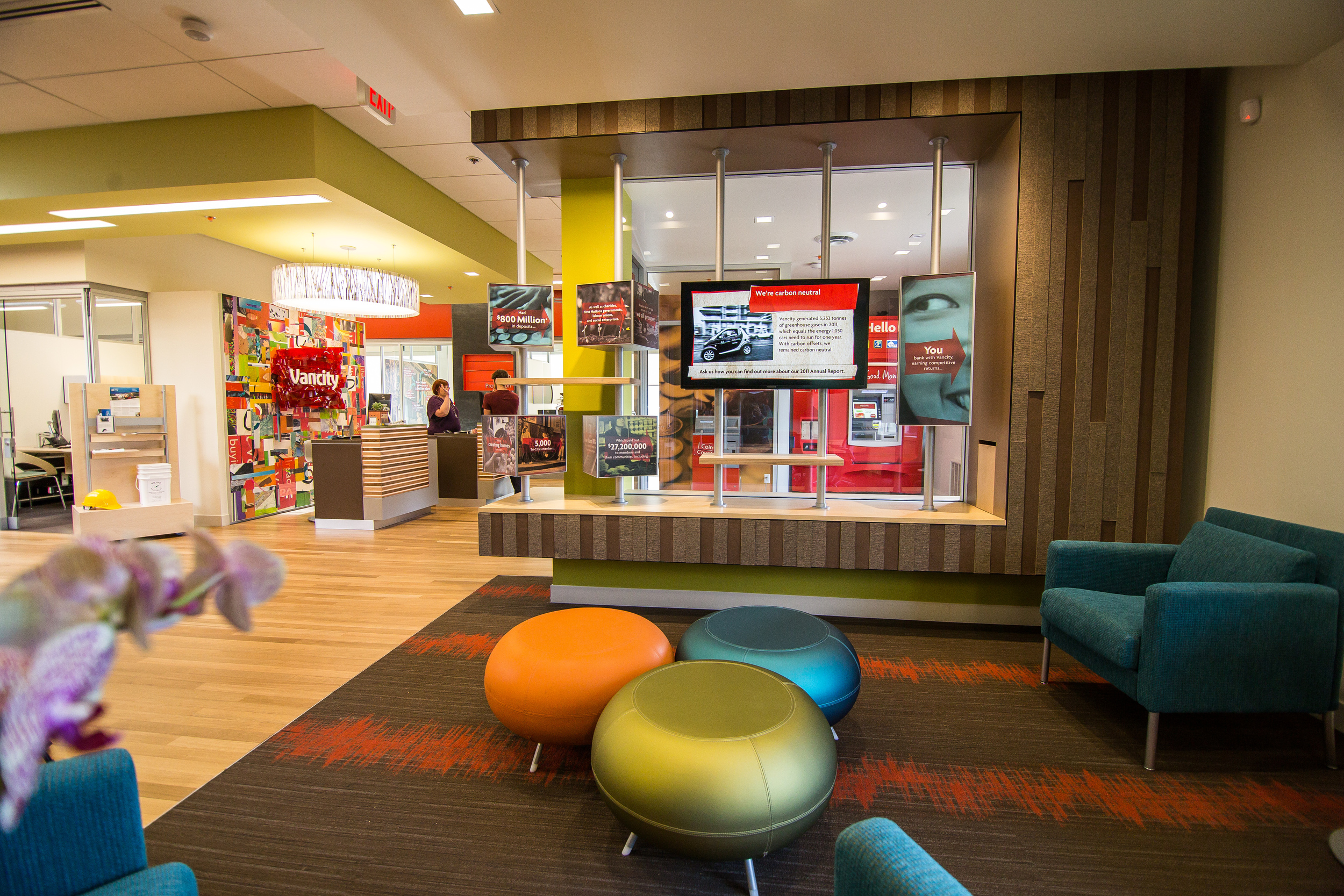
At $16B Vancity in Vancouver, British Columbia, we designed a destination prototype called the “Community Catalyst” to showcase their bold vision of “Redefining Wealth,” while engaging local communities in a fresh way. Vancity’s new Think Tank serves as an incubation hub for attracting local businesses and non-profits.
The Gift showcases local merchants goods and leaders that support community well being. The Community Stage is open to local non-profits and organizations to gather and is booked out months in advance. A new staff brand language culled from some of the prototype helps tell their rich values-based banking story while showing people, spaces and solutions to help banking improve lives.
5. Design for flexibility amidst dynamic pattern shifts
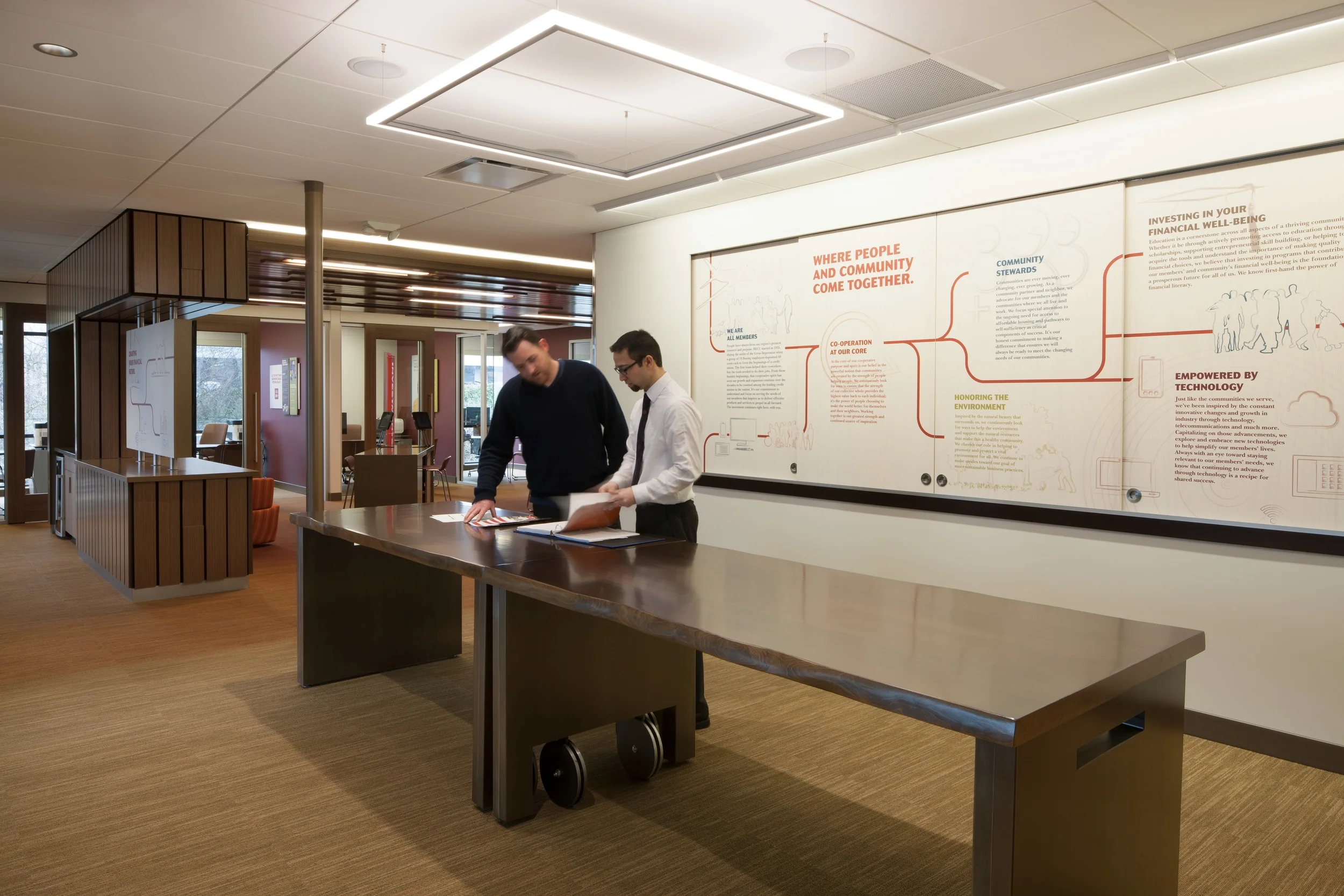
A standing Collaboration Space was designed for casual staff and client meetings that rolls away for seminars, events and community meetings from 10 to 45 people. The white board opens to an 80″ monitor and drop down LCD projector.
As fast as technology is shifting, building fixed walls, multiple rooms and spaces that can’t adapt or change to meet evolving branch and product patterns can be a costly mistake.
Spaces that are adaptable for varying purposes, times of day, members and staff are vital to utilizing effective footprints.
As 24/7 mobile and online transactions replace teller lines, newer technologies like shared touchscreen platforms and video tellers will take hold as they have in airports and hardware stores. With more “mobile” employees out in the community, video-conferencing in flexible “hoteling” offices allow mobile advisors and dual purpose functionality for privacy and advisory access.
What does it mean for the future of banking?
While it’s simple to suggest that branches of the future must be smaller, more efficient and more tech savvy, what’s not easy is designing an integrated staff and bold client brand experience that links to your unique value proposition, target audiences, product mix and distinct neighborhoods.
Future branches will be about high functioning advisory service, effective site locations, flexible digital spaces that can adapt to a changing world and “living labs” that evolve with the dynamic technology changes ahead. Dated oversized transactional branches will fade like checkbooks.
Brick and mortar is an expensive proposition unless you can carve out your own unique branded business model that increases performance, employee engagement, customer service scores and accompanying profitable relationships for those opting for a human touch.
The re-invention of banking as we have known it for 30 years is in full swing. How ready is your financial institution to stand apart and thrive?