CULTURE BUILDING WORKSHOP: TURNING STAFF INTO BRAND CHAMPIONS

The 2015 Financial Brand Forum is coming up this April

Weber Marketing Group is leading an invaluable pre-conference brand culture workshop.

Hurry, space is limited!

Date: Wednesday, April 29
Time: 1:30 pm to 4:30 pm
Location: Caesars Palace Resort – Workshop Space A
Cost: $249 per person

Merriam-Webster named “culture” as its 2014 Word of the Year. Ask any bank or credit union what differentiates them and invariably most answer “our service.” But if everyone is saying “our friendly service is better,” they can’t all be right. Good research often reveals the fallacy of that illusion.

Join Weber Marketing Group’s Mark Weber, CEO, Karen McGaughey, VP Client Services and Brooke Coughlan, Brand Trainer, and Reg Marrinier, VP Retail Banking for BlueShore Financial, in this pre-conference workshop immediately following the Zappos Company Culture Tour, sponsored by Weber Marketing Group, at the Financial Brand Forum.

How can you truly leverage staff to deliver a unique, powerful branded experience? Join a team of cultural design experts from Weber Marketing Group for this highly interactive, three-hour workshop. Dig deep into the keys that will unlock ways to align, inspire and direct your entire workforce to live your brand in bold, fresh ways.

What you’ll learn:

  • Key insights from Zappos on brand culture.
  • How to drive your financial institution’s brand value from the inside-out.
  • How the right cultural strategy will elevate your brand to new levels of performance, alignment and consistency.
  • How Enterprise onboards, retains and empowers millennials at record levels.
  • The transformational shifts required to deliver a truly unique, branded experience.
  • BlueShore Financial’s journey to brand culture building to create a unique, affluent Canadian model.
  • Ways to unite employees behind your distinct brand promise to be brand ambassadors.
  • The steps you can take and processes you can use to get staff on board with your brand so that they live it out — every day.
  • How to fuse HR into the branding process, and how to go beyond basic service or sales training.

The workshop includes many bank, credit union and corporate case studies and interactive exercises that will show you how to create a competitive brand advantage by strengthening your internal culture.

 Mark Weber, CEO, Weber Marketing Group
Mark Weber, CEO, Weber Marketing Group
 Brooke Coughlan, Brand Trainer (Former National Business Development Manager for  Enterprise )
Brooke Coughlan, Brand Trainer (Former National Business Development Manager for Enterprise )
 Reg Marrinier, SVP Retail and Business Banking, BlueShore Financial
Reg Marrinier, SVP Retail and Business Banking, BlueShore Financial
 Karen McGaughey, VP Client Services, Weber Marketing Group
Karen McGaughey, VP Client Services, Weber Marketing Group

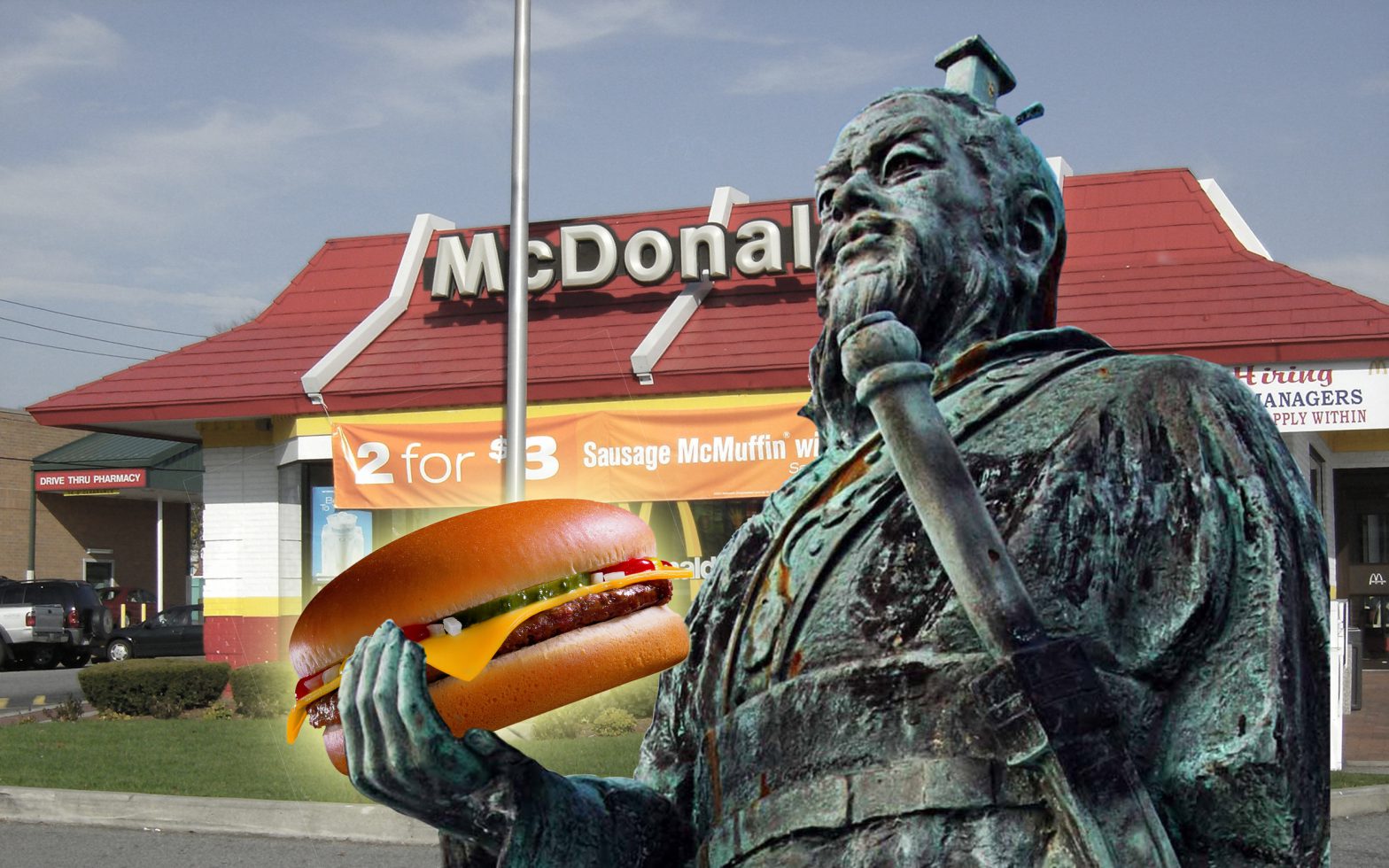
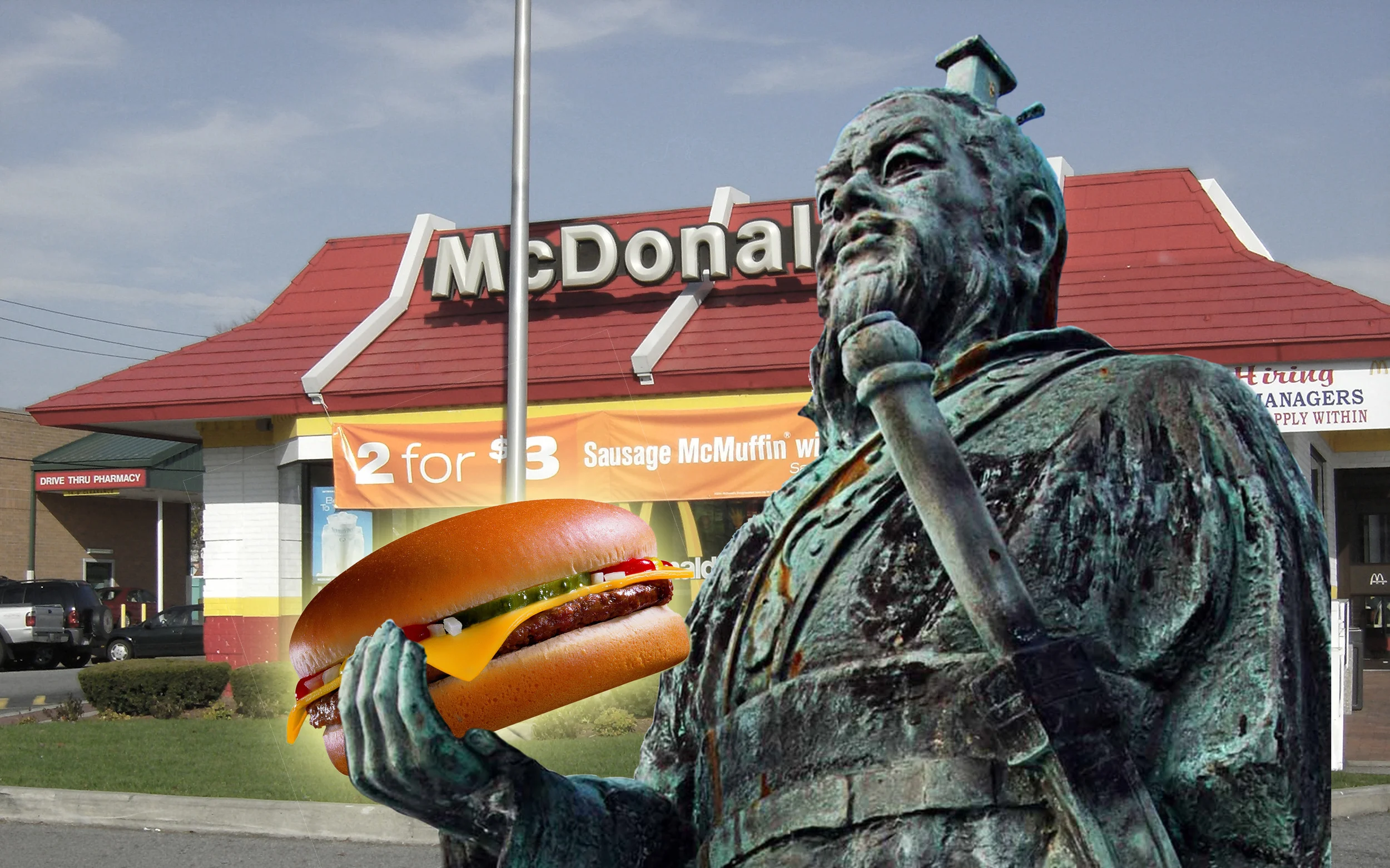
Sun Tzu and the Art of the Cheeseburger

Choose the fights worth fighting.

Much ballyhoo has been made about McDonald’s new “Love” campaign. Certainly, some people are genuinely moved by the new TV spots. At the same time, some question whether McDonalds cares more about America than it does about Americans. They ask if “love” is a whitewash veneer painted over a declining corporate giant. 

I’m sympathetic to many of those arguments. But what I was more curious about was how the brand strategy was developed that led the Golden Arches to this campaign in the first place.

In my mind, they  must have ran down a list of positioning questions and didn’t see a lot of compelling options.

Does McDonalds make the best hamburger?
Definitely not.
(Red Robin)

Is your food healthier?
No.
(Subway)

If not healthier, can it be positioned as the most unhealthy yet tasty option available?
Nope.
(Carl’s Jr)

Is it the cheapest?
Uh, uh.
(Taco Bell)

Made to order?
No again.
(Jack in the Box)

Organic? GMO-free?
Ha!
(Chipotle)

Customizable? Flame-broiled? Free toppings? Retro fun? Third-place? Fast delivery? Fresh, never frozen?
No, no, no, no, no, no, no.
(Panera, Burger King, Five Guys, Johnny Rockets, Starbucks, Jimmy John’s, etc.)

So what would you do if it were your responsibility to make some brand magic? 

You might look for inspiration from the master brand strategist of millennia past: Sun Tzu. He’d tell the McDonalds execs to pick a fight they can win.

Love fits that bill.

The above questions notwithstanding, there are millions of people who love McDonalds. They love the food just as it is. A surge of endorphins flood their brain at the mere thought of McDonalds fries

I know this to be true.

Here’s something else I also know: When I was seven years old, my father surprised me at school, picked me up and took me to McDonalds for lunch. I ordered my first Big Mac (in fact, it was my first non-Happy Meal ever). We sat outside in the spring sun, under the shade of a fiberglass Mayor McCheese. I didn’t play on the McDonaldland toys that day. No, in that moment, I was a man. It’s silly, but that is one of my fondest memories of my childhood.

McDonalds will never be able to convince me that their food is good for me. But they can remind me of special moments long past. As Sun Tzu would say, that’s a fight they can win.

So despite that fact that I haven’t had a McDonalds hamburger in the last few decades, there’s a part of me, deep down, that still loves it.

Will this campaign rescue the McDonalds brand from an inevitable death spiral? Perhaps. Perhaps not. But what alternative does the burger giant have? 

He who knows when he can fight, and when he cannot, will be victorious.

— Sun Tzu

Starbucks Theatre of Roasting

Seattleites know coffee. In fact, we’ve been called coffee snobs.

What does Starbucks, a major coffee icon in a coffee town, do when a green mermaid logo has become synonymous to the McDonald’s golden arches where you can expect convenience and consistency? In a town of coffee snobs – me included – you need more. To stay relevant, Starbucks has created a very high-end, state of the art prototype store. A prototype store is nothing new for Starbucks, but this store,  rumored to cost $20 million dollars, took it to a whole new level.

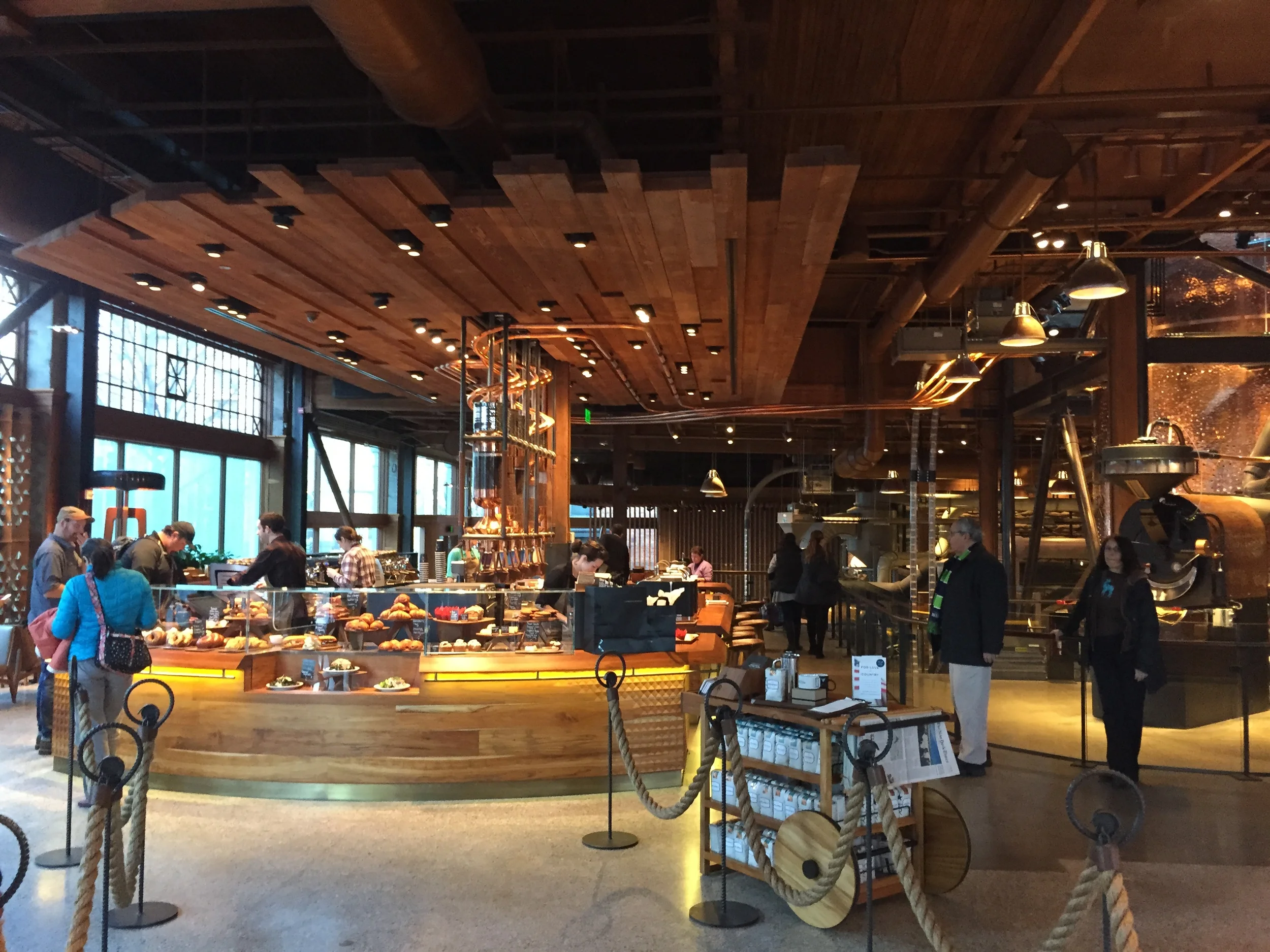
 Main entrance queuing area.
Main entrance queuing area.

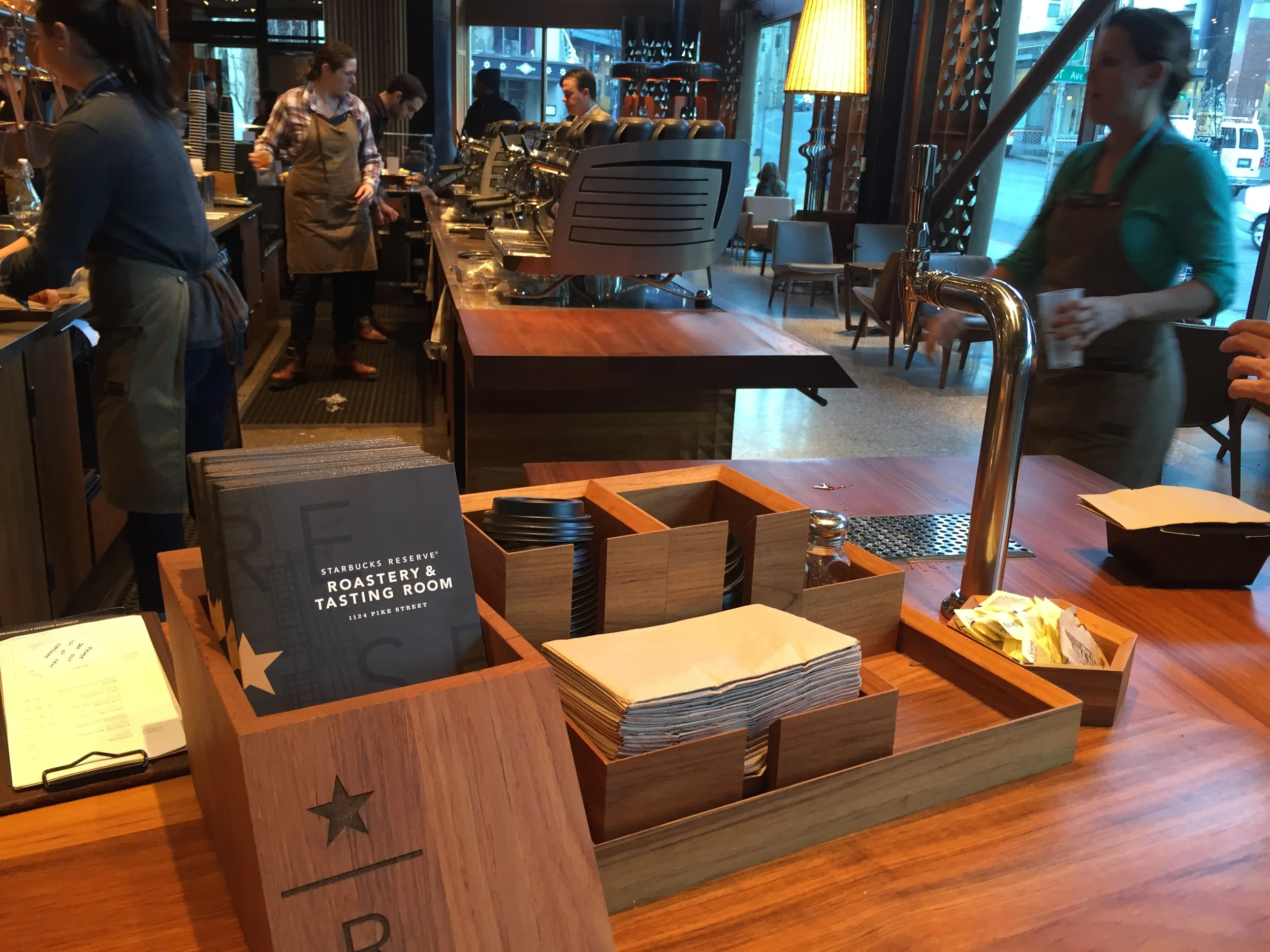
Welcome to the Starbucks Reserve Roastery and Tasting Room. In this store you will not find the mermaid logo, the same color palette or the same brand guidelines as you’ll find in the other stores. Most people walking on the street would not assume it was a Starbucks unless they looked very closely.

So why do something like this?

Starbucks needs to remain innovative to stay competitive and relevant in a crowded marketplace. And they haven’t forgotten to cater to consumers that demand more of an experience, rather than just a standard cup of joe.

Starbucks delivers an experience in this new store by literally roasting beans within feet of where the beans are then handcrafted with care and brewed. It’s an experience where a cup of coffee means more than “a cup of coffee” — it has become an event.

Many of the articles about the Starbucks Reserve Roastery and Tasting Room claim it is catering to high-end consumers. While I agree that the store itself is high-end, I believe it caters to those who demand more of an experience and are willing to pay for it. The cheapest cup of coffee is $3 and they sell beans which can cost up to $43 per pound. Still, the store is always busy.

Starbucks hopes to roll out 100 of these new stores around the world.  Will this store work in markets other than Seattle? Yes, I don’t think Seattleites are the only coffee snobs.

Would You Have Approved This Ad?

Branding is built on differentiation. Differentiation takes courage. Here’s a gut-check exercise for financial marketers.

 This article was originally written for  The Financial Brand  and published in February 2014.  Click here to read the original .
This article was originally written for The Financial Brand and published in February 2014. Click here to read the original .

I play a little mental game from time to time to help me keep my creative mind open. The game is called, “Would I Have Approved That?” It’s a game that’s easy to learn, simple to play, and you can do it just about anywhere. But before I explain the rules, a little background.

I’ve spent the last 15 years as a writer, concept developer, and creative director. And in that time, I’ve worked almost exclusively for financial institutions. I’ve worked on big, brassy projects, and wee little things. I’ve created and sold thousands of concepts. And I must have killed or rejected tens-of-thousands more.

And what have I learned in this time? Repetition can hone your skills, but it can also blunt innovation if you’re not careful.

Repetition can hone your skills, but it can also blunt innovation if you’re not careful.

I have personal preferences like anyone else. Have those preferences and gut reactions ever got in the way of a great idea? Probably. How many brilliant concepts have I let slip through my fingers over the years because I just didn’t see the potential? Hard to say, but I’m sure there’ve been some doozies. All of us who are in a professional position to approve or reject creative work have probably done the same. And we may have done it more often than we care to admit.

When I see a well-executed piece of creative ‹ whether a billboard, a TV spot, a web banner — heck, it could be a statement stuffer —‹ my natural reaction is, “Of course! That idea is so obviously good, it had no problem getting approved.”

But did it really?

No way. In reality, the creative team probably started with a brilliant “creative brief,” then went to work. They threw away a ton of decent ideas in search of one great one. Great ideas usually feel pretty weird at the beginning, but the hallmark of a good creative person is their ability to help others see the potential in a concept. In other words, it’s not the quality of ideas that matter in advertising and marketing. Nothing matters if you can’t get your ideas approved.

Which brings me to the game, “Would I have Approved That?”

How to Play

I start with a piece of well-executed creative. Then I try to mentally transport myself back in time. I try to imagine how the assignment was launched. How was the creative brief written? What were the goals of the organization? What key insight set the direction? Does the strategy hold up?

Then I try to imagine the concept as an idea on a piece of paper. What form did it take in the weeks and months before it made its public debut? How was it presented to the decision makers? If I were one of those decision makers, would I have seen the merits of the idea? Or would I have got hung up on the myriad of reasons do go another direction. Something safer. Something less “edgy.” Something more logical.

Would I have approved that?

Here’s a commercial for Raymond James, a financial investments firm. Watch it. And as you do, try to imagine the idea being pitched to you for your approval.

As a marketing pro, you’re caught in an interesting dynamic. On one end, the creative team wants you to approve this concept (that they lost sleep over for weeks and love dearly, perhaps even irrationally). They made a good case. On the other side, your boss/CEO/board of directors wants you to reach your marketing goals without embarrassing the organization or making them look bad. Sometimes those forces feel very much at odds. In the middle, there’s you:‹ with all of your personal motivations and hot buttons, whatever they may be Under those conditions, it can be pretty hard to approve anything that doesn’t feel like a “sure thing.”

Okay, ready to play? Watch this, and as you do, think of all the positive qualities of the concept, but also make a mental list of the logical reasons why this spot should never be approved.

Did you like it? Don’t answer, because for this exercise it doesn’t matter.

Did you make a mental list of reasons to kill it?

Here are five reasons that jumped out at me. Each of these I could imagine hearing as real feedback to this concept, all plausible reasons this spot should have never seen the light of day:

  1. Raymond James didn’t exist then. The Librarian is 187 years old. But Raymond James was founded in 1962, so when she started “planning,” it couldn’t have been with Raymond James.
  2. Raymond James is not a British company. There’s a British accent on the voice over. The lady looks vaguely British (especially as a young woman in the cobblestoned lined streets of her town). Some of the sets could have been used on a Downton Abbey shoot. I believe she’s riding a Norton Motorcycle (which admittedly is pretty cool). But Raymond James is headquartered in Florida.
  3. Sex. Marriage bed + old people = gross. Someone’s going to complain.
  4. Investing is serious. Sure, this spot is fun, maybe even funny. But investing is about people’s life savings. It’s serious, right? Should we be making jokes?
  5. No one lives that long. No one can live to be 187. It’s impossible.

If you were inclined to talk yourself out of approving this concept, you could do it easily. There are dozens of “good reasons” to kill an idea like this.

And while I’d like to think that I would have approved this concept straight away, I can’t honestly say that I would have. The 187-year-old woman may have seemed too farcical to me on paper. Instead of a charming character, I may have viewed her as absurd, irrelevant, and unidentifiable (think: a female Leslie Neilsen). That alone might have been reason enough for me to discard this idea in search of another.

Would I have been right? If I were in a position to kill this ad, what would Raymond James have lost?

This commercial was beautifully shot, masterfully executed, and wonderfully directed. I can’t speak for you, but my sense of the Raymond James brand before seeing this spot was something boring, stuffy, and traditional. After seeing this spot, Raymond James is still boring, stuffy, and traditional ‹ but they’re also flexible, smart, and committed to tailoring the best possible plan for the needs of each of their clients.

More than anything, this ad told a story that compelled me to feel something about Raymond James that I would not have felt with a more logical, head-on, feature-oriented approach to the assignment. And that’s what great storytelling is all about.

That’s my gut check. What do you think?


Mini-MAC 2014

Mini-MAC 2014 is coming up on November 7th in Ontario, California.

And it’s not too late to register!

Mini-MAC is a one-day workshop designed to be perfect for every level of your marketing team.

Weber Marketing’s Randy Schultz will be leading a session.


 Randy Schultz, VP Marketing, Weber Marketing Group
Randy Schultz, VP Marketing, Weber Marketing Group

Finding the “WHY” in your Brand

To stand out from the crowd, your credit union needs a brand that communicates not just what you do, but why you do it.  Randy Schultz is on a mission to help CUs create brands that are built for the long-term, so he’ll share insights on how to build brand equity, develop an authentic brand platform, design a relevant look and feel, and align the brand voice with your values.

This session is all about you, so email Randy ahead of time on the ONE BIG BURNING QUESTION you have about your brand.

You’ll also hear from Casey Boggs, President of LT Public Relations, speaking on storytelling and reputation management, and Teresa Freeborn, CEO of Xceed Financial Credit Union, on “climbing the credit union ladder”.

Learn more about Mini-MAC and register today.

Does content marketing make you more interesting?

Despite all the hoopla, content marketing isn’t new. In fact, it’s older than you are. When you consider that John Deere produced The Furrow magazine to “educate” farmers all the way back in 1895, and since then, persuasive copy has been used to sell everything from tires to toys to toilet paper, you realize that we’ve all been marketing content for centuries.

Of course, that doesn’t mean we’re good at it.

What John Deere had the foresight to understand back at the turn of the 20th century (though the term “content marketing” wasn’t coined until the 1990’s) was that thought leadership influences brand perception. And even though 2014’s marketing environment is very different from what it was in 1895, this is still valuable knowledge. Deere’s style of thought leadership has morphed into this thing called “content marketing,” an all-encompassing term for good copywriting—in a good format, in a good channel—that doesn’t have a hard sell. Today, large, well-branded organizations are embracing this discipline, as they spend significant amounts of money on branded journalism designed to elicit emotional reactions from their audiences. They’re even creating their own media channels to share it.

But many small to mid-sized company types still haven’t embraced this marketing tactic. They’re busy plugging away at headlines for print ads, coming up with jingles for radio spots, and developing bullet points for direct mail/email. They’re using social media, but mostly to promote products and store events and to issue mea culpas when online banking goes down. Content marketing hasn’t become a line item in most marketing budgets. And not many people in smaller organizations have added “Content” to their titles.

This is a problem. Look around… people are tuning out traditional, intrusive, mostly unwanted advertising. This is especially true for Millennial and Gen Z targets. These digital natives have been over-marketed to since birth, and they possess highly sophisticated BS meters. Born into an overload of crisis communications that has them questioning Wall Street, politicians, and “experts,” they suffer from a serious lack of trust in the media and in advertising messages.

So, how can we use thought leadership to influence positive perceptions of our brand? Or maybe the better question is: how can we sell ourselves less in order to sell ourselves more? How do we gain the trust of the younger customers we all need?

It begins with one simple principle: the less we talk about ourselves, the more interesting we are.

Think about your own consumption of media. Most of us are drawn to topics that inform, entertain, and inspire us.  They likely aren’t “Me, Me, Me!” messages. We form positive perceptions of the brands that deliver valuable, relevant content, the kind of content that gives us something useful in return for our attention. And those are the brands we reward with our business. (See a few examples at the bottom of this post.)

Here are some ideas for making your marketing messages more interesting:

1.     Conduct an honest evaluation of your digital and printed content. Gather up your newsletters, emails, direct mail, blog and social media posts, etc. and lay it all out on a conference table. What are you telling people you stand for? How likely are they to share your information? Are you addressing real customer pain points or your own talking points?

2.    Figure out what you need to change in order to show people why you are in business. Investing in messages that don’t talk about products might mean letting your professional guard down a bit in order to communicate more like a human and less like a corporate herald. Or finding a new channel, one that is more appealing to your target. At a minimum, it means discovering and developing stories that illustrate your understanding of real issues, demonstrating why someone should believe in you.

3.    Dedicate real resources to content creation. Content marketing is a big job, no bones about it. (I won’t tell you how long it took me to write this article, but it definitely didn’t crank itself out.) You need someone who is always on the lookout for great, sharable moments and topics. Someone who can curate content and keep it moving. This person needs to lead your program with a publisher mentality, marshaling resources and generating ideas.

4.   Stop talking and listen. What do your customers care about? What’s happening in their world? What’s happening in your own world? What are the interesting trends or changes shaping your industry? Are there partners or other brands you can support or leverage to share a point-of-view?

5.    Find your non-corporate voice. Identify a subject likely to resonate with your targets and then write (or have a talented employee write) something that ties in, something with a point-of-view, something someone might pass along—because it is that helpful, insightful, or entertaining. Start a social media conversation. Take pictures. Create a video. (Video offers a unique opportunity to slow down the scroll of headlines, visually communicating an idea faster than a paragraph can.)

6.    Determine your metrics. Decide how you’re going to measure your content marketing program up front. This doesn’t have to be a highly technical process involving advanced analytics—though if you’ve got them, use them. Likes (the organic kind) and shares are easy to measure by volume and give you an initial understanding of what’s interesting. Comments also give you invaluable insight into who you’re reaching.

7.    Test it. Push your content through the channels you already use and see what lights up. Are people interested? Do they care? Definitely don’t spend money promoting content that isn’t hitting its mark.

8.    Adapt. In digital channels, you find out very quickly if people care. Use that data to speed up decision-making, to revamp or drop content that isn’t working, and to amplify anything that is gaining momentum. You’ll know when your content is resonating because people will respond to it.

There are many reasons your organization should invest in content marketing. Overall, content can be very cost effective to produce, has a longer shelf life with a lower risk than traditional campaigns you may run, and puts you back in charge of your reach and distribution. It improves your search results and helps people who share your values find you. And, if it connects, motivates, and amplifies someone’s experience of your brand, it creates a truly loyal fan base.

One last thought:  we, as marketers have to remember that there is a live person behind every mailbox, Tweet, Facebook share, and website visit. And that person, that moving target, wants to fall in love with something that matters. Content marketing is about sharing something that matters, something that gives that person a reason to believe.

_______________________________

Examples of content marketing’s impact:

P&G’s #LikeAGirl campaign goal is to transform “like a girl” from insult to compliment. Does this impact the way you feel about Always feminine products?

Old Spice uses Twitter to develop rapport with followers. Their site is less about sales messages than it is about the non-stop humor their followers seem to appreciate.

Lowes’ 6-second How To videos on Vine provide quick, helpful tips and tricks for common chores. I’m definitely using their tip about lining my paint pan with foil the next time I tackle a painting project. So helpful!

Pepsi’s Millennial-facing site, Pepsi Pulse attracts those interested in the arts and music scenes. Does this influence the way younger audiences feel about Pepsi?

Airbnb’s neighborhood guides are helpful resources that don’t say a peep about renting. But the tie into the brand and the product is obvious. Hmmm… London looks amazing. I wonder if they can find me a flat in April.


 

Telling a story of optimism. Inviting the community to join in.

Energy, optimism & community.


OnPoint Community Credit Union recently unveiled its new brand campaign, titled, "Join In". The series of spots, produced by Weber Marketing Group, showcase Oregon, its people, and the unbridled potential of those who call Oregon home.


“Amy”

Together, we will make something.

Strong businesses build strong communities. OnPoint knows that. This spot celebrates it.

FUN FACT:


“Lauren”

I am more than one thing.

People love Portland for its wonderful eccentricities. Here we follow a young woman as she explores the city and community she loves.

FUN FACT:

  • The Rose City Rollers, Portland's professional roller derby team, showed up to help us out with the last shot.


“Richard”

Life is full of opportunity, and I join in.

Wherever Richard goes, OnPoint goes with him, unlocking possibilities and potential along the way.

FUN FACT:


Pics from the shoot.

OnPoint and Weber Marketing Group spent four days criss-crossing Oregon to shoot the series. Here are a few behind-the-scenes pics from the shoot.

Inside the Elevations Branch 2.0

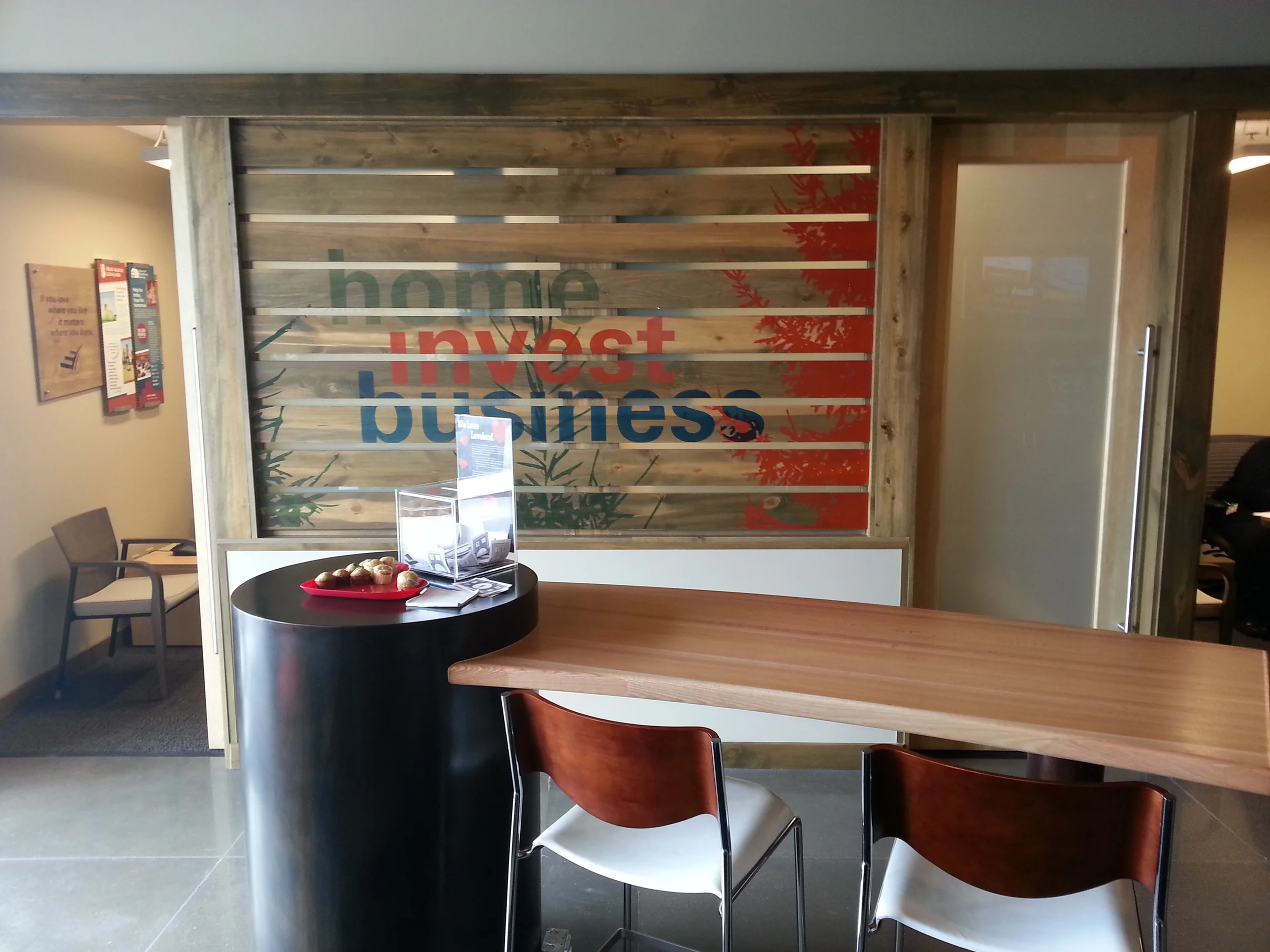
When you love where you live, it matters where you bank.

Elevations Credit Union, based in Boulder, CO, built their brand on that premise. It’s about loving local, embracing differences, and reflecting the community in which you live. Weber Marketing with architectural partners EHS Design helped Elevations define a branch of the future prototype that extends that brand positioning into the newest Elevations branches — the first of which opened to the public this summer.

Check out this video, produced by Elevations, showcasing the new space and using it as a recruitment and culture-building tool for their staff.

Built to be local, crafted, and authentic.

Locally sourced materials, like recycled barn wood, coupled with messaging that celebrates a hyper-local community, add up do very distinctive Elevations brand experience.

The Gang Braves the Bucket

 Amiright?
Amiright?

On August 14th, our friends at CUES threw down the icy gauntlet and called us out for the ALS Ice Bucket Challenge. We were honored to participate, and in good company with our follow nominees: Filene Research InstituteCUiNSIGHT.comCurrency MarketingNew Jersey Credit Union League and CUNA.

The only problem: Our VP of Marketing Randy Schultz was out of the office. And if you know Randy, you know a guy long overdue for a bucket of ice water to the head.

So we waited. And we plotted. And we took the opportunity to find out more about this important cause and the social fundraising phenomenon that has been soaking the nation.

Why ice buckets for ALS? What we learned is that there may actually be some rationale for this combo. ALS is a figuratively chilling prospect, but also some say that the shock of ice water approximates certain symptoms of the disease. It’s a devastating illness that often strikes in middle age and may kill its victims within only a few years. But, compared to other diseases, it affects a relatively small percent of the population. As a result, it has not been especially lucrative for pharmaceutical companies to pursue. So why not donate the $100 instead? Wouldn’t that be better for an underfunded cause than whatever silly stunt gets you out of paying?

Those who cried “slacktivism” in the early days of the #IceBucketChallenge can rest assured – thousands of wet heads have made a genuine difference. Between the time CUES called us out and the time we completed our challenge less than a week later, donations to the ALS Association had ballooned from $7.6 million to $31.5 million. That dwarfs the dollars raised a year ago without the challenge.

For the record, I felt a lot of things in the moments after that ice water hit me, but slack was not one of them. As it turns out, no amount of being “ready” kept me from hyperventi-laughing like a weirdo in front of my colleagues.

By the time Randy got back, we were…let’s say “prepared” to do this thing.  We had time to recruit a good contingent of our staff. We had buckets. We had ice. We had cameras. Some of us forgot towels. That’s on them.

Most importantly, we had our list.

Weber Marketing Group nominated the following organizations to join us in the ALS Ice Bucket Challenge:

A long list? Maybe, but hey – that’s how the dollars continue to grow, and the awareness continues to spread. Our team did also donate in addition to taking the challenge. And I’m proud to say that our staff members exceeded the internal corporate matching challenge in under 10 minutes.

We hope you’ll join us in funding the research, resources, and ultimately a cure for ALS. Ice bucket or no ice bucket, you can donate online at the ALS Association.

Of course, it was Randy who put it best when he tweeted our nominees…

Stay icy, my friends!

Putting Social First

Recently, I had the pleasure of presenting to a really smart group of credit union leaders about social media at the CUES School of Strategic Marketing. But I only had 30 minutes on the agenda – how do you cover such a sprawling topic in such a tiny timeframe? Lucky for me, the group was focused and we got right down to business tackling three big challenges of managing a social media program: 

  1. Risk Management
  2. Resource Management
  3. Culture Management

We hear the first two challenges all the time from our clients. These are widely recognized as pain points, holding many financial institutions back from good engagement and sometimes from being in the social space at all. The third challenge, managing the interaction between an organization’s culture and its social media, is something I don’t think we’re talking about enough, which is exactly why it’s on the list. (If any of these sound familiar to your organization, let’s talk!)


In the third section of my presentation, there was one little line buried in the middle of a slide that I really wish we had more time to give. At least, it should have been a headline. Actually, it could have been the whole half hour. Not because it’s especially original, but because it’s a “back to basics” approach that we all need to remind ourselves about sometimes:   

“Social media is social first, then media.”

This is why we struggle to place social media in our traditional owned/earned/paid media model. It’s owned, though platforms continually remind us that we’re playing in their sandbox. It’s earned, if we’re doing it right. More and more, it also needs to be paid, as the formula for gaining reach is being further monetized.   

But a “social first” approach means focusing on the social merit of our content before we think about the media model. If our content doesn’t engage real people in the real world, it’s not going to fare better in the virtual world, no matter how much we spend to boost it.

A simple way to assess content for social merit is to treat your colleagues as a casual focus group. Share it with them and see how they respond.

  • Do they find the idea informative or delightful?
  •  Do they express a genuine emotion, or have a good laugh?
  • Do they talk about it, and tell other people?
  • Does it shift the way they think about the topic?
  • Does it inspire them to be generative – to share their own stories or build on yours somehow? 

If you see these reactions, you’re on the right track. If not, your content isn’t ready for social media.

Don’t get me wrong, the core insights driving your social media program should come from deep understanding of, and empathy for, your external target audiences. But tapping your coworkers for a reaction to specific content can gain you some great insights too. And they’re sitting right over there.

So the next time I get to speak on social media, I won’t make the cardinal mistake of burying the lead. I hope that the attendees at the CUES School had many takeaways from our 30 minutes together. I certainly learned a lot listening to them. But if they only remember 30 seconds, I hope it includes putting social first.

Further Reading:

Recently, my colleague Kristiana Lockman published a great piece about harnessing the talents and passions of your internal stakeholders to make your social media program successful. This speaks more directly to that third critical area of challenge, culture management. If your social media strategy doesn’t have a robust section for engaging your internal brand advocates, this will be a terrific place to start.

Check out participants’ tweets about CUES School of Strategic Marketing on the hashtag #CUESMarketing, follow that organization at @TheRealCUES, and follow Weber Marketing Group at @WeberMarketing.

Also:

Kristiana and I will be doing a webinar on September 4th called Is Your Social Media Program Anti-Social: Why financial institutions need to make their social media more social (and how you can start today). It will include plenty of practical tips and tools – we hope you’ll join us!